
The modern world bombards us with an unending stream of information. From emails and notifications to news articles and social media feeds, our brains are constantly processing an overwhelming amount of data. In this digital age, the ability to effectively manage and recall information is no longer a luxury; it’s a necessity. Just as a well-organized physical office allows for efficient work, a robust mental filing system can dramatically improve our productivity, learning, and overall cognitive function. This is about more than just remembering facts; it’s about creating a framework for understanding, retaining, and retrieving information with precision and ease. It’s about mastering your mind by building a sophisticated internal library.
The Foundation of a Robust Mental Filing System: Understanding Your Brain’s Architecture
Before we can begin to build an effective mental filing system, it’s crucial to understand the basic principles of how our brains store and retrieve information. We often think of memory as a single entity, but in reality, it’s a complex interplay of different processes and systems. Recognizing these distinctions is the first step towards strategically enhancing our recall capabilities.
Sensory Memory: The Fleeting Gateway
Sensory memory is the shortest form of memory, holding an exact replica of sensory information for a very brief period – fractions of a second to a few seconds. This is the initial buffer where all the stimuli from our environment first arrive. Think of the fleeting image you see when a camera flash goes off, or the echo of a sound that lingers for a moment. While its duration is short, sensory memory plays a vital role. It allows us to process incoming information and decide what is important enough to be attended to and passed on to the next stage. If we don’t pay attention to sensory input, it quickly fades away, never reaching our conscious awareness. For our mental filing system, the key takeaway here is the importance of attention. If information doesn’t grab our attention, it won’t even enter the system.
Short-Term Memory: The Working Workspace
Short-term memory, also known as working memory, is where we hold and manipulate information for immediate use. It has a limited capacity, typically holding around seven pieces of information (plus or minus two) at any given time, and a limited duration, lasting about 20-30 seconds without rehearsal. This is the mental equivalent of your desk surface – where you actively work on current tasks. When you try to remember a phone number someone just told you, or when you’re following a recipe, you’re using your short-term memory. The magic happens when we use techniques to extend the life and capacity of short-term memory, a process known as chunking and rehearsal. By grouping related pieces of information or actively repeating it, we can keep it active for longer.
Long-Term Memory: The Vast Archive
Long-term memory is our vast and seemingly unlimited storage for information. This is where we store everything from our childhood memories to learned skills and knowledge. Information from short-term memory is transferred to long-term memory through a process called consolidation. This transfer isn’t automatic; it requires active engagement and encoding. Long-term memory is further divided into:
- Explicit (Declarative) Memory: This is conscious memory of facts and events. It’s what we can deliberately recall and talk about.
- Episodic Memory: Memories of personal experiences and events, tied to a specific time and place (e.g., your last birthday party).
- Semantic Memory: General knowledge about the world, facts, concepts, and meanings (e.g., the capital of France is Paris).
- Implicit (Non-Declarative) Memory: This is unconscious memory that influences our behavior. It includes skills and habits.
- Procedural Memory: Memories of how to do things, like riding a bike or typing (once learned, these are often effortless).
- Priming: The phenomenon where exposure to one stimulus influences the response to a subsequent stimulus.
Understanding these different memory types allows us to tailor our strategies for creating our mental filing system. We need to design methods that effectively move information from the fleeting sensory stage to our active working memory, and then to the robust long-term archive.
Creating a personal mental filing system can significantly enhance your ability to organize and recall information effectively. To further understand the cognitive principles that underpin memory retention, you may find it beneficial to explore the article on primacy and recency effects in memory. This article delves into how the order in which information is presented can impact your ability to remember it, providing valuable insights that can complement your mental filing system. For more information, visit What Are Primacy and Recency Effects in Memory?.
Strategies for Building Your Mental Filing System: Encoding and Organization
Once we understand the brain’s architecture, we can begin to implement strategies to effectively encode and organize information, making it easier to retrieve later. This is where the practical application of memory techniques comes into play. The goal is to transform raw data into meaningful, interconnected pieces of information that can be readily accessed.
The Power of Elaboration and Association
Simply repeating information is rarely enough for lasting retention. The most effective encoding techniques involve elaboration – thinking deeply about the meaning of the information and how it relates to what you already know. When you encounter new information, ask yourself:
- What does this remind me of?
- How is this similar to or different from something I already know?
- Why is this important?
- Can I explain this in my own words?
Association is a cornerstone of effective encoding. We are more likely to remember something if we can link it to existing memories, images, or concepts. Think of creating mental hooks. For instance, if you need to remember a new person’s name, try to associate it with a characteristic they have or a famous person with the same name. The more vivid, unusual, or emotional the association, the stronger the memory will be.
Visualizing Information: Creating Mental Images
Our brains are highly visual. We often remember images more easily than abstract concepts or long strings of text. Transforming information into mental pictures is a powerful way to encode it. This doesn’t mean you need to be an artist; the more bizarre, exaggerated, or even humorous the image, the more memorable it will be.
- Method of Loci (Memory Palace): This ancient technique involves associating items you need to remember with specific locations in a familiar place, like your house. You mentally walk through your house and place each item in a distinct spot. To recall the items, you mentally retrace your steps.
- Keyword Method: For learning vocabulary or abstract terms, this involves creating a mental image that links the sound of the word to its meaning. For example, to remember the Spanish word “carta” (letter), you might visualize a playing card with a letter written on it.
Chunking and Categorization: Grouping for Graspability
As we learned with short-term memory, chunking is essential. Breaking down large amounts of information into smaller, manageable chunks makes it easier to process and remember. This is why phone numbers are often presented in groups of three or four digits. Similarly, categorization helps us organize information into logical groups. When you learn new facts about a subject, try to place them within existing categories or create new ones. This hierarchical organization allows your brain to navigate and retrieve information more efficiently.
The Role of Emotion and Significance
Information that carries an emotional charge or is perceived as highly significant is more likely to be remembered. This is an evolutionary adaptation – our brains are wired to pay attention to things that are important for survival or that evoke strong feelings. While we can’t always infuse every piece of information with emotion, we can leverage this principle by:
- Connecting information to personal values and goals: If something aligns with your personal aspirations or beliefs, you’re more likely to remember it.
- Seeking out the emotional context: When learning about historical events, for example, understanding the human emotions involved can make the information more impactful and memorable.
Retrieval Practices: Accessing Your Mental Files Effectively
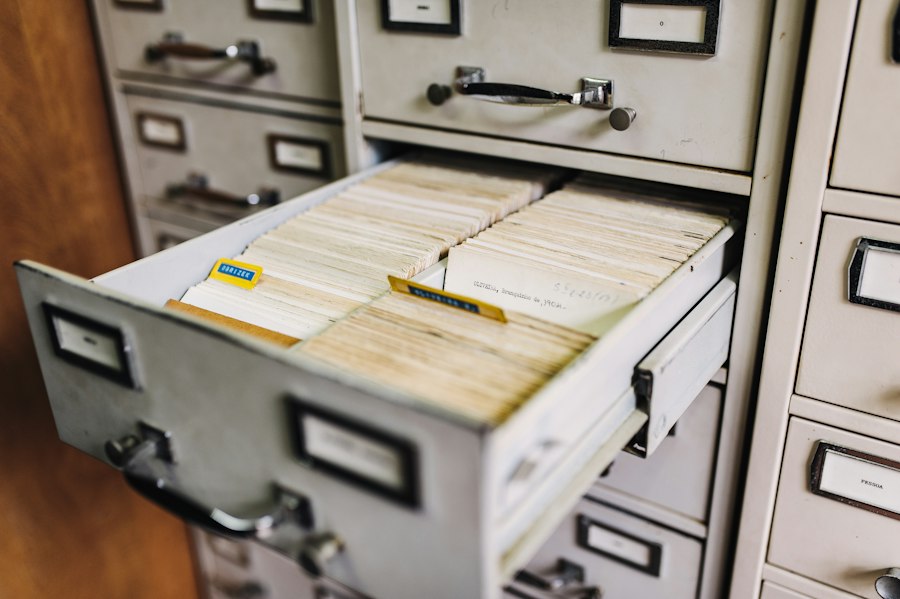
Encoding and organization are only half the battle. The true test of a mental filing system is its ability to retrieve information when needed. This requires practicing specific retrieval strategies. The act of retrieving information strengthens the neural pathways associated with that memory, making it even easier to access in the future.
Spaced Repetition: The Key to Long-Term Retention
Spaced repetition is a learning technique that involves reviewing information at increasing intervals. Instead of cramming all your studying into one session, you revisit the material periodically. The idea is that each time you successfully recall information after a longer interval, the memory becomes more robust. There are various spaced repetition systems (SRS) and apps that can automate this process for you, curating review schedules based on your performance. This is like regularly checking your filing cabinets to ensure everything is still in order and easily accessible.
Active Recall: Testing Yourself Constantly
Active recall is the opposite of passive review. Instead of rereading notes, you actively try to retrieve the information from your memory. This can be done through:
- Flashcards: A classic tool for active recall.
- Practice Questions: Answering questions related to the material without looking at your notes.
- Self-Quizzing: Asking yourself questions about what you’ve learned and trying to answer them.
The struggle to recall information, even if you get it wrong initially, is what strengthens the memory. It’s like forcing yourself to search for a file before giving up and just asking someone where it is. This active search process makes the retrieval pathway stronger.
Retrieval Cues and Context
Retrieval cues are stimuli that help us access stored information. These can be anything from a word, a smell, a song, or even a particular mood. The more retrieval cues you can associate with a piece of information during encoding, the more ways you have of accessing it later.
- Context-Dependent Memory: Information is often easier to recall in the same environment or context in which it was learned. If possible, try to recall information in a similar mental state or physical location.
- State-Dependent Memory: Similarly, your internal state (mood, alertness) can act as a retrieval cue.
Developing a rich network of interconnected cues is like having multiple labels and cross-references for your mental files.
I recently discovered a fascinating website called Memory Athlete that offers techniques to improve memory skills. The Memory Athlete site provides resources for both beginners and advanced learners. If you’re interested in enhancing your cognitive abilities, check out Memory Athlete for some great tips.
Maintaining and Optimizing Your Mental Filing System: Ongoing Practices
A mental filing system is not a static entity; it requires ongoing maintenance and optimization to remain effective. Just as a physical filing system can become cluttered or disorganized over time, our mental systems need regular attention.
The Importance of Sleep and Rest
Sleep is not a passive state of unconsciousness; it’s a crucial period for memory consolidation. During sleep, particularly during deep sleep and REM sleep, the brain processes and stores information learned throughout the day. Insufficient sleep can severely impair our ability to encode new memories and retrieve existing ones. Prioritizing quality sleep is one of the most fundamental steps in maintaining a healthy and efficient mental filing system. It’s during sleep that the brain “files” away the day’s experiences and learning, moving them from short-term to long-term storage.
Mindfulness and Focus Training
In our hyper-connected world, distractions are a constant threat to our mental filing system. Developing mindfulness and focus training helps us to better attend to incoming information, ensuring it enters our system in the first place. Mindfulness practices, such as meditation, train the brain to stay present and less reactive to distractions. This improved ability to focus allows for deeper processing and more effective encoding. It’s like ensuring that only relevant documents are placed in your inbox and that you’re not getting sidetracked by every piece of junk mail.
Regular Review and “De-Cluttering”
Just as you would periodically review and purge old files from a physical system, it’s beneficial to regularly review and reinforce important information. This doesn’t necessarily mean forgetting less important things, but rather prioritizing what needs to be readily accessible.
- Periodic Refreshers: Dedicate time to revisit key concepts or information that you haven’t accessed in a while.
- Identifying and Re-filing: Sometimes, information might feel “lost” because it’s not properly categorized. Taking time to reflect on what you know and how it fits together can help re-organize these scattered memories.
- Discarding Irrelevant Information: While not all forgotten information is harmful, an overly cluttered mind can lead to confusion. Consciously letting go of information that is no longer relevant or useful can free up mental space for more important data.
Creating a personal mental filing system can significantly enhance your organizational skills and improve your overall productivity. To further complement this approach, you might find it beneficial to explore techniques that enhance your cognitive abilities. For instance, an insightful article on how to develop visual intelligence through memory offers practical strategies that can help you visualize and categorize information more effectively. You can read more about it in this related article. By integrating these methods, you can create a more robust mental framework for managing your thoughts and ideas.
Elevating Your Cognitive Performance: The Ultimate Goal
| Step | Action | Purpose | Tools/Methods | Estimated Time |
|---|---|---|---|---|
| 1 | Identify Categories | Organize mental information into clear groups | Mind mapping, brainstorming | 30 minutes |
| 2 | Create Filing Structure | Develop a system to store and retrieve information easily | Folders, notebooks, digital apps (e.g., Evernote, Notion) | 1 hour |
| 3 | Assign Keywords/Tags | Enhance searchability and quick access | Tagging systems, color coding | 30 minutes |
| 4 | Regular Review | Keep the system updated and relevant | Weekly or monthly review sessions | 15-30 minutes per session |
| 5 | Practice Retrieval | Improve memory and reinforce filing habits | Quizzes, flashcards, mental recall exercises | 10-15 minutes daily |
Creating a sophisticated mental filing system is not merely an exercise in memory enhancement; it’s a pathway to unlocking your brain’s full potential. The ability to recall information quickly and accurately, coupled with improved focus and understanding, translates directly into enhanced cognitive performance across all areas of life.
Boosting Learning and Problem-Solving Capabilities
With a well-organized mental library, learning becomes a more fluid and efficient process. New information can be easily integrated with existing knowledge, leading to deeper comprehension and faster acquisition of new skills. When faced with a problem, your mind can rapidly access relevant past experiences, concepts, and solutions, enabling you to approach challenges with greater insight and creativity. The ability to draw connections between disparate pieces of information is a hallmark of high-level problem-solving.
Enhancing Productivity and Efficiency
Imagine never wasting time searching for information, either mentally or physically. A robust mental filing system eliminates this bottleneck. You can access the data you need instantly, allowing you to complete tasks faster and with less mental fatigue. This improved efficiency frees up cognitive resources for more complex thinking and strategic planning, leading to a significant boost in overall productivity.
Strengthening Confidence and Reducing Stress
The anxiety of forgetting important details or struggling to recall information can be a significant source of stress. By building a reliable mental filing system, you can alleviate this pressure. Knowing that you can access what you need when you need it fosters a sense of confidence and control. This allows you to approach demanding situations with greater composure and effectiveness. The peace of mind that comes from a well-managed mind is invaluable.
The journey to mastering your mind is an ongoing one, but the rewards are profound. By understanding how your brain works and implementing strategic encoding, organization, and retrieval practices, you can build a powerful mental filing system that serves as the bedrock for enhanced learning, unparalleled productivity, and a more confident, capable you.
To wrap up, invite readers to elevate their memory and cognitive performance by downloading Memory Athlete, the ultimate app for mastering recall, sharpening focus, and unlocking their brain’s full potential.
FAQs
What is a personal mental filing system?
A personal mental filing system is a method of organizing and storing information in your mind in a systematic way, similar to how a physical filing system organizes documents.
Why is it important to have a personal mental filing system?
Having a personal mental filing system can help improve memory, increase productivity, reduce stress, and enhance decision-making skills by allowing you to access information quickly and efficiently.
How can I create a personal mental filing system?
To create a personal mental filing system, you can start by categorizing information, using mnemonic devices, visualizing concepts, practicing active listening, and regularly reviewing and reinforcing the information you want to remember.
What are some tips for maintaining a personal mental filing system?
Some tips for maintaining a personal mental filing system include staying organized, avoiding information overload, taking breaks to rest your mind, practicing mindfulness and meditation, and seeking help from professionals if needed.
How can a personal mental filing system benefit my daily life?
A personal mental filing system can benefit your daily life by helping you stay focused, make better decisions, improve problem-solving skills, enhance creativity, and ultimately lead to a more organized and efficient lifestyle.





Leave a Reply