

The Dawn of Brain-Inspired Computing
The human brain, an intricate biological marvel, has long served as the ultimate benchmark for computational power and efficiency. Its ability to learn, adapt, and remember with astonishing energy efficiency far surpasses even the most advanced conventional supercomputers. For decades, computer scientists and neuroscientists have dreamed of creating machines that mimic the brain’s architecture and processing capabilities. This aspiration has led to the burgeoning field of neuromorphic computing, a paradigm shift that aims to move beyond the traditional Von Neumann architecture – with its inherent separation of processing and memory – towards a more integrated, brain-like model. At the heart of this revolution lie neuromorphic chips, a new class of hardware designed to emulate the fundamental building blocks of the brain: neurons and synapses.
Unlike traditional silicon chips that operate on a clock-driven, sequential instruction set, neuromorphic chips are asynchronous and event-driven. They leverage a network of artificial neurons that communicate with each other through “spikes,” much like their biological counterparts. These spikes represent information, and the strength of the connections (synapses) between neurons can be adjusted, allowing the network to learn and adapt over time. This fundamentally different approach holds immense promise for tackling problems that conventional computers struggle with, particularly those involving pattern recognition, real-time learning, and complex decision-making in noisy, dynamic environments. The implications for artificial intelligence, robotics, and even understanding the brain itself are profound. We are witnessing the very early stages of a computational revolution, one where silicon begins to mirror the elegance and efficiency of biological intelligence.
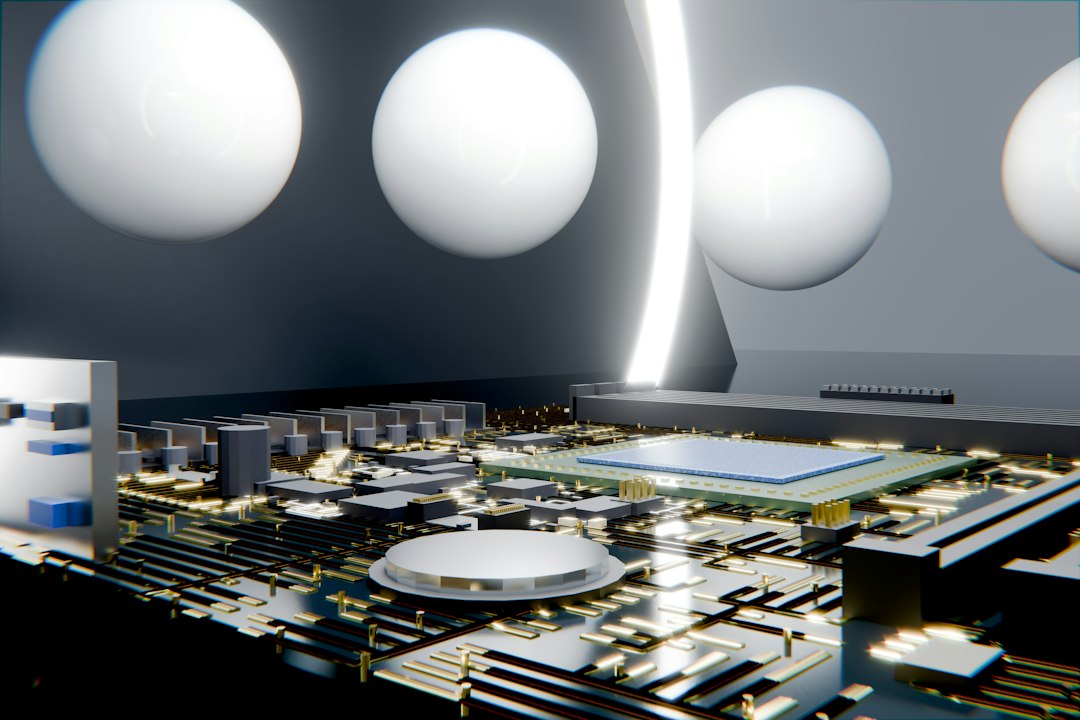
Neuromorphic chips are designed to mimic the way brains process and remember information, offering a revolutionary approach to computing. For those interested in enhancing their cognitive abilities, a related article titled “10 Mental Warm-Ups Used by Memory Champions” provides valuable insights into techniques that can improve memory and mental agility. You can explore these strategies further by visiting the article here: 10 Mental Warm-Ups Used by Memory Champions.
Architecting Memory in Silicon
The concept of “memory” in a neuromorphic system differs significantly from conventional computer memory. Instead of discrete memory banks where data is stored and retrieved, memory in a neuromorphic chip is intrinsically linked to its processing units. This “in-memory computing” paradigm is crucial for overcoming the Von Neumann bottleneck, the energy and time wasted in constantly moving data between the CPU and memory.
Mimicking Synaptic Plasticity
The human brain’s ability to learn and remember is largely attributed to synaptic plasticity – the strengthening or weakening of connections between neurons based on activity. Neuromorphic chips aim to replicate this by integrating memory directly into the “synaptic” connections. Each artificial synapse, often implemented using specialized memory devices, stores a “weight” that represents the strength of the connection. When a neuron “fires,” it sends a signal across these synapses, and the weights determine how strongly the signal influences the receiving neuron.
Materials like memristors (memory resistors) are at the forefront of this effort. A memristor is a passive two-terminal circuit element that remembers the amount of charge that has flowed through it, thereby retaining its resistance value even after the power is removed. This non-volatility and ability to change resistance based on historical electrical activity make them ideal candidates for artificial synapses. By adjusting the voltage across a memristor, its resistance can be tuned to represent the synaptic weight. Multiple memristors can be combined to form a synaptic array, enabling massively parallel operations and energy-efficient weight updates, directly emulating the continuous learning and forgetting processes observed in biological brains.
Event-Driven Processing and Spiking Neural Networks
Traditional computers operate synchronously, with every operation tied to a global clock cycle. Neuromorphic chips, on the other hand, embrace an asynchronous, event-driven model. Information is conveyed through discrete “spikes” or pulses of electrical activity, much like neurons firing action potentials. This approach is highly energy-efficient because only active neurons and synapses consume power.
Spiking Neural Networks (SNNs) are the computational model of choice for neuromorphic hardware. In an SNN, neurons accumulate input from their connected synapses. Once a neuron’s internal “membrane potential” reaches a certain threshold, it “fires” a spike, sending a signal to its downstream neurons. The timing of these spikes, rather than just their presence, can encode information. This temporal encoding adds another layer of complexity and computational power, allowing for more nuanced information processing than traditional artificial neural networks. The ability to process information based on the timing of events makes SNNs particularly well-suited for tasks involving real-time sensory data processing, such as auditory analysis, visual tracking, and robotic control. The distributed nature of memory and processing within an SNN means that knowledge is not stored in a central location but is distributed across the synaptic weights, making the system robust to failures and inherently capable of associative memory.
Powering Memory with Minimal Energy
One of the most compelling advantages of neuromorphic computing lies in its unparalleled energy efficiency, especially when compared to conventional CPUs and GPUs performing AI tasks. The brain operates on roughly 20 watts of power, an astonishing feat considering its computational prowess. Replicating this efficiency is a primary driver for neuromorphic chip design.
Overcoming the Von Neumann Bottleneck
The Von Neumann bottleneck refers to the fundamental limitation of traditional computer architectures where the processor and memory are physically separated. Data must constantly be moved back and forth between these two components, consuming significant energy and time. This data transfer often becomes the bottleneck, limiting the overall performance and efficiency, particularly in data-intensive tasks like machine learning.
Neuromorphic chips fundamentally circumvent this bottleneck by integrating memory and processing. Each “neuron” or “synapse” effectively has its own local memory, eliminating the need for constant data shuttling. When a neuron processes information, the synaptic weights (memory) are right there, allowing for in-place computation. This architectural change drastically reduces energy consumption associated with data movement, which is a major contributor to power consumption in conventional systems. The inherent parallelism of neuromorphic architectures further contributes to efficiency, as many computations can occur simultaneously without waiting for a central processing unit.
Sparse and Event-Driven Computation
The energy efficiency of neuromorphic systems is also a direct consequence of their sparse and event-driven nature. In a biological brain, only a small fraction of neurons are active at any given moment. Similarly, in a neuromorphic chip, only the neurons and synapses involved in processing a particular event consume power. When there’s no input or activity, the system largely remains dormant, drawing minimal power.
Contrast this with a conventional processor, which is constantly cycling through instructions and burning power regardless of whether useful computation is occurring. The “spiky” nature of communication further contributes to efficiency. Instead of sending continuous streams of data, neurons send discrete pulses. This intermittent communication dramatically reduces the energy spent on signal transmission. For applications involving sensor data, where information often arrives sparsely and asynchronously (e.g., a sudden movement in a visual field, a specific sound event), this event-driven approach is inherently more efficient than continuously processing all data streams. This leads to significantly lower power dissipation, making neuromorphic chips ideal for edge computing, mobile devices, and applications where energy autonomy is critical.
Many people are fascinated by the techniques used by a Memory Athlete to enhance their cognitive abilities. If you’re interested in learning more about these techniques, you can explore the resources available on the website. Becoming a Memory Athlete can significantly improve your memory and learning skills.
Current Landscape of Neuromorphic Hardware
The field of neuromorphic computing is a vibrant arena with several research institutions and tech giants investing heavily in developing novel hardware. Each approach brings its own strengths and focuses on different aspects of brain-inspired computation.
IBM’s TrueNorth and NorthPole
IBM has been a pioneer in neuromorphic computing with its TrueNorth chip, unveiled in 2014. TrueNorth was a significant milestone, featuring 1 million programmable neurons and 256 million programmable synapses, all operating with astonishing power efficiency. It demonstrated the ability to perform complex real-time pattern recognition tasks, such as object detection and classification, with power consumption in the tens of milliwatts. The architecture was designed for extreme parallelism and scalability, with each core containing a small number of neurons and synapses, connected to neighboring cores in a mesh network. TrueNorth’s strength lies in its ability to perform inference tasks very efficiently, leveraging its fixed-functionality cores.
Building on this legacy, IBM introduced NorthPole, a subsequent neuromorphic chip that further pushed the boundaries of efficiency and integration. NorthPole boasts even higher density and improved energy efficiency, incorporating advanced in-memory computing techniques. It focuses on achieving greater computational density while maintaining the low power profile characteristic of neuromorphic designs. NorthPole aims to expand beyond just inference, exploring capabilities for on-chip learning and adaptation, moving closer to the brain’s dynamic learning capabilities. IBM’s strategy emphasizes building complete systems around these chips, demonstrating their practical applicability in various AI domains.
Intel’s Loihi Series
Intel’s Loihi neuromorphic research chip, first introduced in 2017, takes a different approach, focusing more explicitly on enabling on-chip learning and adaptive algorithms. Loihi chips are designed to support a wide range of SNN models and learning rules, allowing researchers to experiment with different computational paradigms. Each Loihi core contains digital neurons and synapses, along with a programmable x86 processor for flexible control and execution of learning algorithms. This hybrid approach allows for both highly efficient spiking computation and the flexibility to implement complex learning routines.
The Loihi series has demonstrated impressive results in various tasks, including gesture recognition, olfactory sensing, and constraint satisfaction problems, often outperforming conventional GPUs in terms of energy efficiency for these specific neuromorphic workloads. Intel’s successive iterations, such as Loihi 2, have focused on increasing the number of neurons and synapses, enhancing programmability, and improving the underlying hardware fabric to support even more complex SNNs and learning algorithms. Intel also provides the Lava software framework, an open-source platform that enables researchers and developers to easily program and deploy SNNs on Loihi hardware, fostering a collaborative ecosystem for neuromorphic research and development.
Other Notable Efforts and Emerging Technologies
Beyond the major players like IBM and Intel, numerous other research groups and startups are making significant strides in neuromorphic hardware. Researchers at various universities are exploring alternative materials and device architectures for artificial synapses, including phase-change memory (PCM), ferroelectric field-effect transistors (FeFETs), and even optical neuromorphic systems. These alternative technologies offer unique properties that could lead to even higher density, lower power consumption, or novel computational capabilities.
For example, some initiatives focus on analog neuromorphic chips, which leverage the continuous physics of analog circuits to directly model neuron and synapse behavior, potentially offering even greater energy efficiency than digital implementations. Others are exploring heterogeneous integration, combining neuromorphic cores with traditional CPUs or GPUs to create specialized accelerators for different parts of AI workloads. The ultimate goal across all these efforts is to create systems that can not only mimic the brain’s incredible processing capabilities but also its ability to learn continuously from data, adapt to changing environments, and make intelligent decisions with minimal energy expenditure. The rapid pace of innovation in this sector suggests a future where brain-inspired computing becomes a ubiquitous component of our technological landscape.
Neuromorphic chips are revolutionizing the field of computing by mimicking the way brains remember and process information. This innovative technology not only enhances computational efficiency but also opens new avenues for artificial intelligence. For those interested in memory techniques, a fascinating article on the PAO system offers insights into how memory athletes utilize specific strategies to improve recall. You can read more about it in this detailed exploration of memory systems and their applications.
The Future of Memory and Computation
| Metric | Description | Value / Specification | Unit |
|---|---|---|---|
| Neuron Count | Number of artificial neurons on the chip | 1,000,000 | neurons |
| Synapse Count | Number of synaptic connections simulated | 256,000,000 | synapses |
| Power Consumption | Energy used during operation | 70 | mW |
| Latency | Time delay in signal processing | 1 | ms |
| Memory Type | Type of memory used for synaptic weights | Non-volatile memristors | – |
| Learning Algorithm | Method used for synaptic weight updates | Spike-Timing Dependent Plasticity (STDP) | – |
| Fabrication Technology | Process node used for chip manufacturing | 14 | nm |
| Operating Frequency | Clock speed of the chip | 200 | MHz |
| Chip Area | Physical size of the chip | 20 | mm² |
Neuromorphic chips are poised to revolutionize computing, particularly in areas where the brain excels: real-time processing, continuous learning, and decision-making in complex, unstructured environments. Their inherent energy efficiency and ability to perform in-memory computation open up a vast array of potential applications.
Edge AI and Intelligent Sensors
One of the most immediate and impactful applications for neuromorphic chips is in edge AI. As more devices become “smart” – from IoT sensors to autonomous vehicles – the need for local, real-time intelligence at the edge of the network is growing exponentially. Sending all sensor data to the cloud for processing is often impractical due to latency, bandwidth, and privacy concerns. Neuromorphic chips, with their low power consumption and ability to process sensory data efficiently, are ideal for embedding AI directly into edge devices.
Imagine smart cameras that can detect anomalies or recognize faces instantly without sending video streams to a data center, or wearable health monitors that can learn a user’s unique physiological patterns and alert them to potential issues in real-time. Autonomous vehicles could use neuromorphic processors to interpret sensor data (LiDAR, radar, cameras) much faster and with less energy than current systems, leading to safer and more responsive driving. These chips can learn and adapt to changing conditions directly on the device, allowing for personalized and robust AI experiences without constant cloud connectivity, thereby enhancing privacy and reliability.
Advanced Robotics and Autonomous Systems
Robotics stands to benefit immensely from neuromorphic computing. Robots need to perceive their environment, learn from interactions, plan actions, and adapt to unforeseen circumstances in real-time. Traditional robotic control systems often struggle with the computational load and energy requirements for these tasks. Neuromorphic chips can provide the brain-like processing capabilities necessary for more agile, adaptive, and energy-efficient robots.
For instance, a robot equipped with neuromorphic vision and auditory systems could interpret complex sensory inputs with human-like speed and accuracy, allowing it to navigate cluttered environments, interact with humans more naturally, and learn new skills through observation and experience. The ability of neuromorphic systems to learn continuously on-chip means robots could incrementally improve their performance over time, much like a child learning through trial and error. This could lead to a new generation of truly intelligent and autonomous robots capable of operating in dynamic and unpredictable real-world settings, from manufacturing floors to disaster relief zones.
Accelerating Scientific Discovery and Brain Research
Beyond practical applications, neuromorphic chips offer a powerful new tool for scientific discovery. By creating hardware that closely mimics the brain’s architecture and processing, researchers can build more realistic computational models of neural circuits. This allows for in-silico experiments that would be impossible or unethical to perform on biological brains.
Neuromorphic platforms can serve as living laboratories for neuroscientists to test hypotheses about learning, memory formation, and various neurological disorders. By simulating large-scale neural networks with biologically plausible parameters, researchers can gain deeper insights into how the brain processes information, forms memories, and generates consciousness. This could accelerate our understanding of conditions like Alzheimer’s, Parkinson’s, and epilepsy, leading to new diagnostic tools and therapeutic interventions. Furthermore, the development of increasingly sophisticated neuromorphic algorithms and hardware will likely inspire new breakthroughs in artificial intelligence, pushing the boundaries of what machines can learn and achieve. The interplay between neuroscience and neuromorphic engineering promises a virtuous cycle of discovery, where insights from one field catalyze progress in the other.
Wrapping Up: Elevate Your Cognitive Edge
The journey into neuromorphic computing is just beginning, but its promise is undeniable. By mimicking the brain’s elegant architecture, these chips are setting the stage for a new era of energy-efficient, adaptive, and intelligent machines. They are not merely faster processors; they represent a fundamental rethinking of how we compute, moving closer to the biological paradigm of learning and remembering. The ability of these chips to seamlessly integrate memory and processing, coupled with their event-driven, low-power operation, positions them as key enablers for the next generation of AI, robotics, and scientific understanding.
As we stand on the cusp of this transformative technology, the human brain remains the ultimate source of inspiration. Its capacity for rapid recall, focused attention, and limitless learning is a testament to its unparalleled design. While neuromorphic chips strive to emulate these abilities in silicon, the opportunity to enhance our own cognitive faculties is equally compelling. Imagine unlocking your brain’s full potential, mastering recall techniques, and sharpening your focus to an unprecedented degree.
Elevate your memory and cognitive performance today by downloading Memory Athlete, the ultimate app for mastering recall, sharpening focus, and unlocking your brain’s full potential. Dive into scientifically-backed training exercises, learn powerful memorization techniques used by world champions, and track your progress as you transform your cognitive abilities. Whether you’re a student, a professional, or simply someone who wants to keep their mind sharp, Memory Athlete provides the tools and guidance to help you achieve cognitive excellence. Download now and embark on your journey to becoming a true memory athlete!




Leave a Reply