
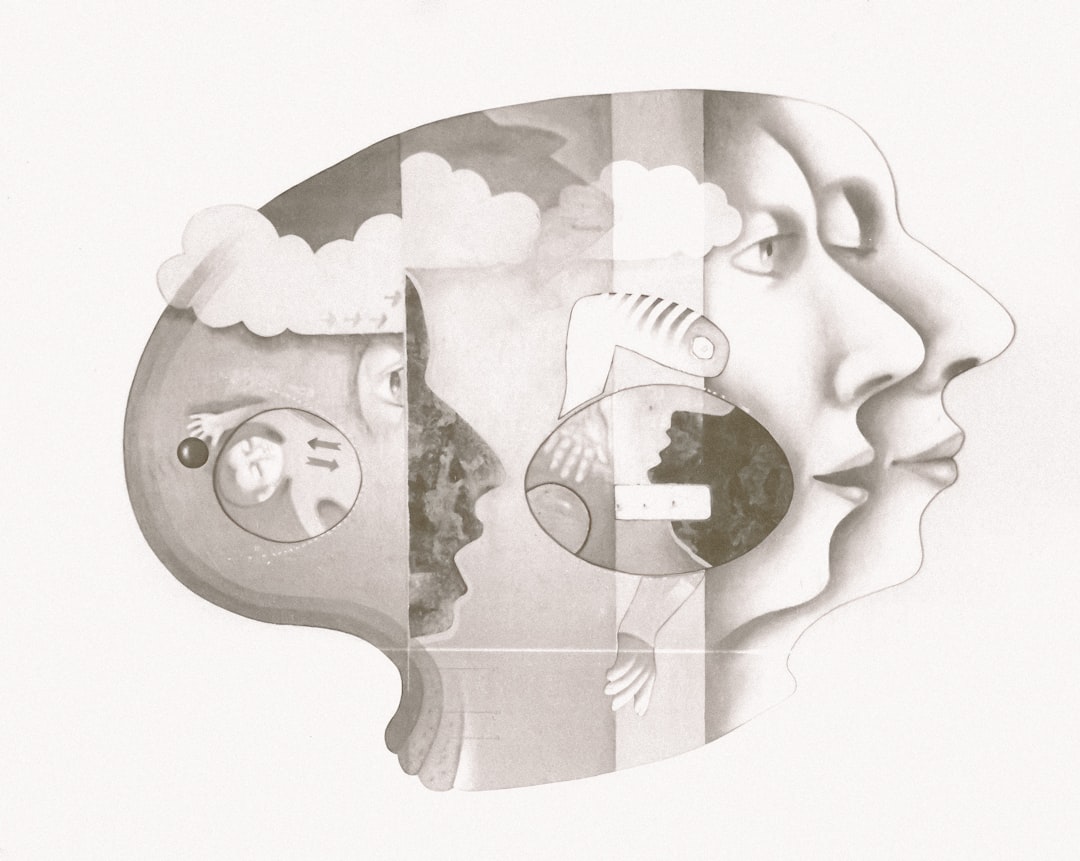
In a world overflowing with information, where the sheer volume of data can feel overwhelming, the ability to recall facts, figures, names, and concepts with ease is no longer a mere convenience; it’s a superpower. Imagine effortlessly remembering every detail of a presentation, flawlessly reciting a complex poem, or acing an exam without the frantic last-minute cramming. This isn’t the realm of science fiction; it’s the accessible reality of mastering the Memory Palace technique, an ancient mnemonic strategy that has been utilized by scholars, orators, and memory champions for millennia. Often referred to as the “Method of Loci” (from the Latin word for “places”), this powerful tool transforms abstract information into vivid, memorable experiences within the familiar landscape of your own mind.
The Foundation of a Super Memory: What is a Memory Palace?
At its core, the Memory Palace technique leverages our innate spatial memory – our incredible ability to remember places, routes, and objects within those places. Instead of attempting to cram information into a disorganized mental void, you actively construct an imaginary (or real) physical space, a “palace” in your mind, and then systematically place the information you wish to remember within it. This isn’t about rote memorization; it’s about creating a rich, multi-sensory narrative that your brain can easily navigate and recall.
The Power of Spatial Memory
Our ancestors relied heavily on spatial memory for survival. Remembering where food sources were, where dangers lurked, and how to navigate back to safety was crucial. This evolutionary hardwiring means our brains are incredibly adept at processing and retaining spatial information. The Memory Palace capitalizes on this fundamental strength, bypassing the often-inefficient mechanisms we typically employ for learning.
The Journey and the Items
Think of your Memory Palace as a journey. Each room, each piece of furniture, each distinct feature within that space becomes a “locus” – a specific location where you can mentally store a piece of information. The key is to associate the information you want to remember with these loci in a vivid, memorable, and often outlandish way. The more bizarre, humorous, or emotionally charged the association, the stronger the memory will be.
If you’re interested in enhancing your memory through techniques like the Memory Palace, you might also find it intriguing to explore the science behind why we forget dreams. Understanding the mechanisms of memory can provide deeper insights into how we can improve our cognitive abilities. For more on this topic, check out the article on the scientific explanation of dream forgetfulness at Why Do We Forget Dreams? Scientific Explanation.
Building Your First Memory Palace: A Step-by-Step Guide
Embarking on your Memory Palace journey is simpler than you might imagine. The most effective palaces are those that are intimately familiar to you, as this reduces the cognitive load of having to both create the palace and store information within it simultaneously.
Choosing Your Palace
Your first Memory Palace should be a place you know exceptionally well. This could be:
- Your childhood home: Every room, every piece of furniture, every corner holds a wealth of familiar detail.
- Your current residence: The layout is ingrained in your daily routine.
- Your workplace: If you spend a significant amount of time there, its features will be readily accessible.
- A well-known public building: A library, a museum, or a school you attended.
The crucial element is that you can mentally walk through it, visualizing it with clarity and detail, without having to actively construct it from scratch.
Mapping Your Route
Once you’ve chosen your palace, the next step is to establish a clear, consistent route through it. This route will be your mental pathway for retrieving information.
- Start at the entrance: Begin at the front door and proceed systematically.
- Follow a logical path: Move from room to room, always in the same direction (e.g., clockwise, or always turning right).
- Identify distinct loci: Within each room, pick out specific, memorable locations. These could be a doorknob, a painting on the wall, a sofa, a bookshelf, a lamp, a window, or even a specific crack in the ceiling. Aim for around 10-20 loci per room, depending on the room’s size and complexity.
- Visualize the journey: Mentally walk through your palace several times, solidifying the route and the specific loci in your mind. This practice is crucial for effortless retrieval later.
Populating Your Palace: The Art of Association
This is where the magic happens. When you have a list of items to remember, you’ll place each item at a distinct locus along your predetermined route, creating a vivid and often bizarre interaction between the item and the location.
- Exaggeration and vivid imagery: Don’t just place an item; make it interact with the locus in an unforgettable way. If you need to remember “apple” at your front door, imagine a giant, glowing red apple blocking the entire doorway, perhaps humming a tune or talking to you.
- Multi-sensory engagement: Engage all your senses. What does the apple smell like? What sound does it make when you try to push it? What does it feel like to touch its waxy skin?
- Action and interaction: Make the item do something. Is the apple bouncing off the doorframe? Is it wearing a tiny hat and monocle?
- Humor and absurdity: The more ridiculous and outlandish your mental images, the more likely you are to remember them. Our brains are hardwired to notice and recall the unusual.
Advanced Memory Palace Techniques: Expanding Your Cognitive Horizons
Once you’ve mastered the basics, you can begin to explore more sophisticated ways to utilize your Memory Palace, making it an even more versatile tool for learning and recall.
Linking and Chaining Information
For lists of related information or sequential data, you can link the images together within your loci.
- Storytelling within a locus: Instead of just one image per locus, create a mini-story involving several pieces of information interacting within that single spot.
- Connecting loci: Imagine the image at one locus directly interacting with or leading to the image at the next locus, creating a continuous narrative flow through your palace. This is particularly useful for remembering processes or chronological events.
The Major System and Number Memorization
For remembering numbers, the Memory Palace can be combined with the Major System (or phonetic mnemonic system). This system converts numbers into consonant sounds, which can then be used to form words. These words can then be visualized and placed within your Memory Palace.
- Number-to-sound conversion: Each digit from 0-9 is assigned a consonant sound (e.g., 1=T/D, 2=N, 3=M, 4=R, 5=L, 6=J/Ch/Sh, 7=K/G, 8=F/V, 9=P/B, 0=S/Z).
- Creating words: A number like 32 would become M-N, which could form “man.” A number like 71 could be K-T, forming “cat.”
- Placing the word image: Instead of just remembering the number, you place an image of a “man” or a “cat” interacting with a specific locus in your palace. This makes memorizing long strings of numbers incredibly efficient.
Using Multiple Memory Palaces
As your memory needs grow, you’ll find it beneficial to create multiple Memory Palaces.
- Thematic palaces: Dedicate specific palaces to different subjects. For example, one palace for historical dates, another for scientific formulas, and another for language vocabulary.
- Nested palaces: For extremely complex information, you can even imagine opening a door in one palace that leads to an entirely different, smaller palace within it. This allows for hierarchical organization of knowledge.
Sure, here is the sentence with the clickable link:
I am amazed by the incredible feats of the Memory Athlete.
The Science Behind the Superpower: Why It Works
The Memory Palace technique isn’t just a clever trick; it’s deeply rooted in how our brains process and store information. Understanding the cognitive mechanisms at play reinforces its effectiveness.
Encoding Specificity Principle
This principle states that memory is most effective when the conditions at retrieval match the conditions at encoding. When you vividly create an image within your Memory Palace, you are creating a rich, multi-faceted encoding. When you later mentally walk through your palace, you are recreating those same conditions, triggering powerful recall.
Dual-Coding Theory
This theory suggests that information is better remembered if it’s encoded both visually and verbally. The Memory Palace inherently uses dual coding: you’re creating a visual image (the item at the locus) and often associating it with verbal information (the name of the item or concept). This redundancy strengthens the memory trace.
The Hippocampus and Spatial Memory
The hippocampus, a key structure in the brain, plays a critical role in forming new memories, particularly those involving spatial navigation and relational memory. By actively engaging your spatial memory through the Memory Palace, you are directly stimulating this crucial brain region, enhancing its function and capacity for memory formation. Studies have shown that memory athletes who use the Memory Palace technique exhibit specific structural and functional changes in their hippocampus, demonstrating the neurological impact of this practice.
Attention and Elaboration
The act of constructing a Memory Palace and placing images within it demands significant attention and cognitive elaboration. You’re not passively receiving information; you’re actively transforming it. This deep processing leads to stronger, more durable memories compared to superficial learning methods like rote repetition.
If you’re interested in enhancing your memory skills further, you might find it beneficial to explore how to effectively memorize English irregular verbs. This technique complements the Memory Palace method by providing practical applications for your improved memory. For more insights on this topic, check out the article here. By combining these strategies, you can unlock even greater potential in your memory retention abilities.
Practical Applications: Unleash Your Memory in Everyday Life
The Memory Palace is not just for memory championships; its applications are vast and can dramatically improve various aspects of your daily life.
Academic Excellence
- Memorizing facts and figures: Historical dates, scientific classifications, chemical formulas, mathematical equations.
- Learning languages: Vocabulary, verb conjugations, grammatical rules.
- Recalling lecture content: Organize key points and concepts from lectures or presentations.
- Preparing for exams: Create palaces for entire subjects, making revision more efficient and less stressful.
Professional Success
- Mastering presentations: Remember key talking points, statistics, and anecdotes without notes.
- Networking: Recall names, faces, and details about people you meet.
- Learning new skills: Memorize steps in a complex procedure or protocol.
- Managing tasks and projects: Create a mental to-do list that’s impossible to forget.
Personal Enrichment
- Remembering names and faces: A common challenge, easily overcome with dedicated loci for new acquaintances.
- Learning poems or speeches: Memorize long texts with remarkable accuracy and fluency.
- Remembering shopping lists: No more forgotten items at the grocery store.
- Never forgetting anniversaries or birthdays: Dedicate specific loci for important dates.
The Journey to a Superpowered Mind
Mastering the Memory Palace is a skill, and like any skill, it requires practice and consistent effort. Don’t be discouraged if your first attempts feel clunky or if your images aren’t immediately memorable. The more you practice, the more intuitive and powerful the technique will become. Start small, perhaps with a simple grocery list or a few key facts for a presentation. Gradually expand your palaces, experiment with different types of imagery, and discover what works best for your unique cognitive style.
The ability to recall information with precision and speed is a true superpower in our information-rich age. By transforming abstract data into vivid, spatial narratives within your mind, you unlock a potential you might never have known you possessed.
To wrap up, invite readers to elevate their memory and cognitive performance by downloading Memory Athlete, the ultimate app for mastering recall, sharpening focus, and unlocking their brain’s full potential.
FAQs
What is the Memory Palace Technique?
The Memory Palace Technique, also known as the Method of Loci, is a mnemonic device that utilizes visualization of familiar spatial environments to enhance memory recall. It involves associating the information to be remembered with specific locations within a familiar place, such as a house or a street.
How does the Memory Palace Technique work?
The Memory Palace Technique works by leveraging the brain’s ability to remember spatial and visual information more effectively than abstract information. By associating the information with specific locations within a familiar place, the brain can more easily recall the information when needed.
What are the benefits of using the Memory Palace Technique?
The Memory Palace Technique can improve memory recall, enhance learning and retention of information, and aid in the organization and categorization of knowledge. It can also be a useful tool for public speakers, students, and professionals who need to remember large amounts of information.
How can I create my own Memory Palace?
To create a Memory Palace, choose a familiar place with distinct locations, such as your home or a well-known street. Then, mentally walk through the place and assign specific pieces of information to each location. Visualize the information in a vivid and memorable way to strengthen the associations.
Are there any tips for using the Memory Palace Technique effectively?
To use the Memory Palace Technique effectively, it’s important to practice visualization and association regularly. Additionally, using exaggerated or unusual imagery can make the associations more memorable. It’s also helpful to review the information regularly to reinforce the memory associations.



Leave a Reply