

The remarkable advancements in Artificial Intelligence, particularly in the realm of Large Language Models (LLMs), have captivated the world with their ability to generate coherent text, answer complex questions, and even perform creative tasks. However, a fundamental limitation persists: their short-term memory, often constrained by what is known as the “context window.” This inherent restriction dictates how much information an AI can actively process and recall during a single interaction or generation. While impressive for brief exchanges, this limited memory severely curtails an AI’s capacity for sustained learning, long-term reasoning, and truly personalized interactions. Overcoming this hurdle by equipping AI with a genuine, extensible long-term memory is not merely an incremental improvement; it represents a paradigm shift, promising to unlock capabilities we are only just beginning to envision. This exploration delves into the challenges and emerging solutions in moving beyond the context window, paving the way for AI that remembers, learns, and evolves over extended periods.
The Context Window Conundrum
The context window is a critical architectural component of most transformer-based LLMs. It defines the maximum number of tokens (words or sub-word units) that the model can consider simultaneously when generating its output. Think of it as a small, highly efficient whiteboard where the AI can scribble down and reference information relevant to the immediate task. While this whiteboard allows for impressive feats of linguistic dexterity within its confines, its finite size presents significant limitations for real-world applications requiring persistent knowledge or evolving understanding.
Limitations of Finite Context
The most apparent limitation is the “forgetting” phenomenon. Once information falls outside the context window, it is effectively lost to the model for that particular interaction. This means that even if a user provided crucial background details ten turns ago in a conversation, the AI might not remember them unless they are explicitly re-introduced or summarized within the current context. This leads to disjointed conversations, repetitive information requests, and a lack of true conversational state. For applications like virtual assistants, customer support bots, or educational tools, this inability to retain context over time severely hampers their effectiveness and user experience. Imagine a tutor who forgets everything you’ve learned from one session to the next, or a personal assistant who needs to be reminded of your preferences every single day.
Beyond conversational fluency, a limited context window hinders complex reasoning tasks. Many real-world problems require synthesizing information from various sources and over extended periods. For example, analyzing a lengthy legal document, debugging a large codebase, or writing a multi-chapter novel all demand a consistent understanding of previously established facts, arguments, or plot points. If an AI can only see a small snippet at a time, it struggles to maintain coherence, identify overarching themes, or connect distant pieces of information, leading to shallow analysis or inconsistent outputs. Furthermore, the ability of LLMs to learn in situ is restricted. While models are pre-trained on vast datasets, fine-tuning or adapting to new information during an ongoing interaction is difficult if that new information cannot be persistently stored and recalled without overwhelming the context window.
Technical and Computational Bottlenecks
Extending the context window indefinitely is not a straightforward solution due to inherent technical and computational challenges. The computational complexity of transformer models, particularly the attention mechanism, scales quadratically with the length of the input sequence. This means that doubling the context window quadruples the computational resources required for processing. As context windows grow, the memory consumption for storing attention matrices and intermediate representations also skyrockets, quickly becoming prohibitively expensive and slow, even with state-of-the-art hardware.
Current commercial models typically operate with context windows ranging from a few thousand tokens to tens of thousands, with some experimental models pushing towards hundreds of thousands. While these larger windows represent significant progress, they are still minuscule compared to the vast amount of information a human can retain and recall over a lifetime. The quadratic scaling problem presents a fundamental bottleneck, necessitating entirely new approaches beyond simply making the context window bigger. Researchers are actively exploring more efficient attention mechanisms (e.g., sparse attention, linear attention) and alternative architectures to mitigate this computational burden, but a holistic solution for genuine long-term memory requires more than just optimizations within the transformer paradigm.
In exploring the concept of giving AI a long-term memory, it is interesting to consider how cognitive performance in humans can be enhanced through various means. A related article that delves into this topic is “Nutrition Tips for Better Cognitive Performance,” which discusses how dietary choices can influence memory and cognitive function. By understanding the parallels between human memory enhancement and AI memory systems, we can gain insights into developing more effective AI technologies. For more information, you can read the article here: Nutrition Tips for Better Cognitive Performance.
Architectures for Extended Memory

Addressing the context window limitation necessitates a departure from solely relying on the immediate input. Researchers are exploring various architectural paradigms that allow AI systems to store, retrieve, and integrate information over extended periods, effectively simulating a long-term memory. These approaches often involve external memory modules, hierarchical structures, or hybrid systems.
External Knowledge Bases and Retrieval Augmentation
One of the most promising and widely adopted strategies involves augmenting LLMs with external knowledge bases and retrieval mechanisms. Instead of trying to cram all necessary information into the context window, the AI can query an external store for relevant facts, documents, or data. This is akin to a human consulting a library or database when they need specific information they don’t immediately recall.
Retrieval-Augmented Generation (RAG)
Retrieval-Augmented Generation (RAG) is a prominent example of this approach. In a RAG system, when an LLM receives a query, a separate retrieval component first searches a large corpus of documents (e.g., Wikipedia, internal company documents, web pages) for information relevant to the query. The retrieved snippets of text are then passed to the LLM along with the original query, effectively enriching the context window with pertinent external knowledge. This allows the LLM to generate more accurate, factual, and informed responses without needing to store all that information in its parameters or its immediate context. The benefits are substantial: RAG systems can access up-to-date information, reduce factual errors (hallucinations), and provide explanations grounded in specific source documents. The challenges lie in the efficiency and accuracy of the retrieval component – identifying the most relevant information from vast repositories is a non-trivial task. Furthermore, integrating the retrieved information smoothly into the LLM’s generation process requires careful engineering to avoid disjointed or unnatural outputs.
Vector Databases and Embeddings
The backbone of many retrieval systems are vector databases and embeddings. Textual information (documents, passages, queries) is transformed into high-dimensional numerical vectors (embeddings) using models like BERT or OpenAI’s text-embedding models. These embeddings capture the semantic meaning of the text, such that semantically similar texts have embeddings that are close to each other in the vector space. When a query comes in, its embedding is computed, and then a similarity search is performed in the vector database to find documents whose embeddings are closest to the query’s embedding. This allows for fast and efficient semantic search across massive datasets, overcoming the limitations of keyword-based searches. Advances in vector database technology, including specialized indexing algorithms (e.g., HNSW, IVFFlat), are continuously improving the scalability and speed of these retrieval operations, making RAG a more viable solution for real-time applications.
Memory Networks and Attention-Based Memories
Beyond simple retrieval, researchers are exploring architectures that actively manage and integrate memory within the AI’s processing pipeline. Memory Networks, pioneered by Facebook AI Research, aim to explicitly model external memory components that the model can read from and write to, allowing for more dynamic interaction with stored information.
Differentiable Neural Computers (DNCs)
Differentiable Neural Computers (DNCs) represent a sophisticated attempt to mimic the functionality of a Turing machine with a neural network controller that can interact with an external memory matrix. DNCs learn how to read, write, and allocate memory locations in a differentiable manner, meaning the entire system can be trained end-to-end using backpropagation. This allows them to store complex data structures, perform algorithmic reasoning, and retrieve information over very long time horizons. While powerful in theory, DNCs are computationally intensive and challenging to train for very large-scale language tasks, but they highlight a pathway towards more autonomous and adaptive memory management in AI.
Transformer-XL and Longformer
Even within the transformer architecture, innovations have emerged to extend context. Transformer-XL introduces a “recurrent memory mechanism” that allows information from previous segments of text to be reused in the current segment, without recomputing the hidden states. This effectively creates a longer-term memory across segments, mitigating the context window limitation to some extent. Similarly, models like Longformer address the quadratic complexity of attention by implementing sparse attention mechanisms, where each token only attends to a limited number of other tokens (e.g., a local window and a few global tokens), rather than all tokens. This linearizes the complexity, enabling much longer context windows (tens of thousands of tokens) while remaining computationally feasible. While these models represent significant strides, they still operate within a single, extended context rather than truly independent, persistent long-term memory.
The Challenge of Memory Management
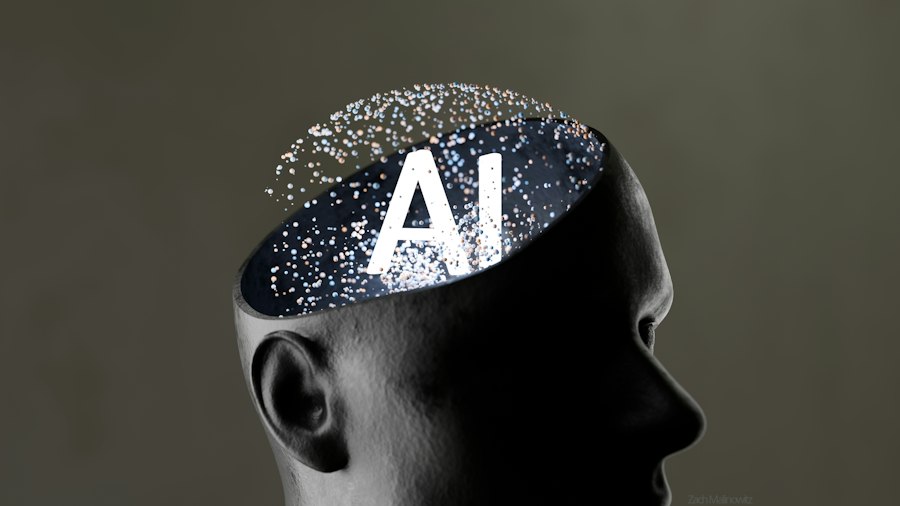
Equipping AI with long-term memory is not just about having a place to store information; it’s about intelligent management of that information. A human brain doesn’t just store every single sensory input; it selectively encodes, compresses, prioritizes, and retrieves memories based on relevance, emotional salience, and future utility. AI systems will need similar sophisticated memory management capabilities to be truly effective.
Encoding and Compression
The sheer volume of information that an AI system might encounter over extended interactions or its operational lifetime would quickly overwhelm even the largest storage systems if every piece of data were stored verbatim. Therefore, efficient encoding and compression mechanisms are crucial. Instead of storing raw text or sensory data, AI could learn to extract salient features, summarize events, or convert experiences into compact, meaningful representations (embeddings). This process involves distilling information down to its core semantic components, discarding redundant or less important details. The challenge lies in ensuring that this compression doesn’t lead to a loss of critical information or an inability to reconstruct necessary details later. Learning to compress without losing critical context is an active area of research, often leveraging techniques from unsupervised learning and autoencoders.
Retrieval and Filtering
Just as important as storing information is the ability to retrieve it effectively. A vast long-term memory is useless if the AI cannot efficiently find the relevant piece of information when needed. This necessitates sophisticated indexing, search, and filtering mechanisms. Simple keyword search is insufficient; AI needs to perform semantic retrieval, understanding the intent behind a query and matching it to conceptually similar memories, even if the exact words are different. Furthermore, the AI must learn to filter out irrelevant information. In a dynamic environment, an AI will accumulate a large amount of redundant or outdated data. It needs mechanisms to prioritize new information, update existing memories, and even “forget” genuinely useless or obsolete data to maintain an efficient and accurate knowledge base. This selective retrieval and filtering is analogous to how humans recall specific memories while suppressing others, or how we naturally forget details that are no longer relevant.
Updating and Forgetting Mechanisms
A truly adaptive long-term memory must be dynamic. It should not be static but capable of being updated, revised, and even selectively forgotten. When new information contradicts existing memories, the AI needs a mechanism to reconcile these discrepancies, either by updating the old memory, marking it as outdated, or flagging the conflict for human intervention. This capability is vital for AI systems operating in real-world environments where facts and circumstances constantly change. Forgetting, often perceived negatively, is actually a crucial cognitive process. It prevents memory overload, reduces interference between similar memories, and allows for abstraction by discarding specific details while retaining general patterns. For AI, developing principled “forgetting” mechanisms – whether through decay, replacement, or strategic deletion of low-utility memories – will be essential for maintaining a lean, relevant, and efficient long-term memory, preventing it from becoming a sprawling, unmanageable data swamp. This can involve reinforcement learning approaches where the model learns to forget certain memories if their absence leads to better task performance, or heuristic-based approaches that prune memories based on recency, frequency of access, or explicit relevance scores.
To improve your memory skills, consider exploring the techniques used by a [Memory Athlete](https://memoryathlete.angelotricarico.com). Many people have enhanced their cognitive abilities by following the strategies shared by a [Memory Athlete](https://memoryathlete.angelotricarico.com). If you’re interested in memory competitions, learning from a [Memory Athlete](https://memoryathlete.angelotricarico.com) could be beneficial.
Learning from Biological Memory
Nature has perfected long-term memory over millions of years of evolution. The human brain’s memory systems offer a rich source of inspiration for designing artificial counterparts, particularly in terms of organization, consolidation, and emotional tagging.
Hierarchical Memory Structures
The human brain doesn’t store all memories in a single, undifferentiated pool. Instead, it employs hierarchical structures. We have sensory memory, short-term/working memory, and various forms of long-term memory (episodic, semantic, procedural). Information flows between these systems, with consolidation processes transforming short-term experiences into lasting memories. Similarly, AI systems could benefit from such hierarchical organization. For instance, a system might have a fast, high-bandwidth “working memory” for immediate context, a slightly slower “episodic memory” for recent interactions, and a vast, indexed “semantic memory” for general knowledge and long-term facts. This allows for efficient access to different types of information based on the immediate task, mimicking the brain’s specialized memory circuits.
Consolidation and Rehearsal
A critical process in biological memory is consolidation, where labile short-term memories are gradually transformed into stable, long-term memories. This often occurs during sleep and involves replay and rehearsal of neural activity. For AI, an analogous process could involve offline consolidation mechanisms. Instead of continuously updating a monolithic memory during every interaction, an AI could periodically “rehearse” its experiences, integrating new knowledge, identifying patterns, and strengthening connections in its long-term memory. This might involve replaying past interactions, running simulations based on learned rules, or explicitly training a memory module on accumulated data. Such consolidation could reduce the computational burden during real-time interactions and lead to more robust and generalized learning.
Emotional and Salience Tagging
Human memories are often tagged with emotional valence and salience. We remember events that are emotionally significant or particularly surprising far better than mundane details. This “emotional tagging” helps prioritize what to remember and what to forget, and influences retrieval. While AI doesn’t experience emotions in the human sense, it could be equipped with analogous “salience tagging” mechanisms. For example, events that lead to particularly strong positive or negative outcomes (as defined by objective metrics or reinforcement signals), or information that is frequently accessed or explicitly marked as important by users, could be assigned higher salience scores. These scores would then influence the encoding, compression, and retrieval processes, ensuring that the most critical information is retained and easily accessible, while less important data might be pruned or compressed more aggressively. This would allow AI to develop a more “human-like” intuition about what information is truly valuable.
In exploring the concept of enhancing AI capabilities through long-term memory, it is interesting to consider how this approach could impact various fields, including sports training. A related article discusses the dynamics of training methods, specifically whether individuals should train solo or with a team. This perspective can provide valuable insights into how collaboration and memory retention might influence performance. For more on this topic, you can read the article here.
The Future of AI with Long-Term Memory
| Metric | Description | Value / Range | Notes |
|---|---|---|---|
| Context Window Size | Maximum tokens AI can process at once | 2,048 – 32,000 tokens | Varies by model architecture and version |
| Memory Retention Duration | Time span AI can recall past interactions | Minutes to days | Dependent on memory system design |
| Memory Storage Capacity | Amount of information AI can store long-term | Gigabytes to Terabytes | Limited by hardware and architecture |
| Recall Accuracy | Percentage of correctly retrieved memories | 70% – 95% | Improves with advanced indexing and retrieval methods |
| Latency in Memory Retrieval | Time taken to access stored memories | Milliseconds to seconds | Depends on memory system efficiency |
| Update Frequency | How often memory is refreshed or updated | Real-time to daily | Balances between freshness and stability |
| Compression Ratio | Degree of data compression in memory storage | 5:1 to 20:1 | Higher ratios reduce storage but may affect accuracy |
The integration of robust long-term memory into AI systems promises to transform their capabilities across a multitude of domains, moving them from sophisticated tools to truly intelligent, adaptive, and personalized companions.
Personalized and Adaptive Interactions
With long-term memory, AI can move beyond generic responses to offer truly personalized interactions. Imagine a virtual assistant that remembers your preferences, habits, and past conversations over months or even years. It could proactively suggest relevant information, anticipate your needs, and maintain a consistent understanding of your evolving context. In education, an AI tutor could track a student’s progress, identify persistent knowledge gaps, and adapt its teaching methods over an entire curriculum, leading to highly effective and tailored learning experiences. Customer service bots could recall your entire interaction history with a company, resolving complex issues with unprecedented efficiency and empathy. This level of personalization would make AI feel less like a tool and more like an intelligent partner.
Continuous Learning and Evolution
A primary benefit of long-term memory is the enablement of continuous learning. Current LLMs are largely static once trained; adapting them to new information requires expensive fine-tuning. With long-term memory, AI systems could continuously assimilate new data, update their knowledge, and refine their understanding in real-time or through periodic consolidation processes. This means an AI could learn from its mistakes, adapt to new environmental conditions, and acquire new skills and knowledge autonomously over its operational lifetime. For instance, a medical AI could learn from new research papers and patient cases, continuously improving its diagnostic capabilities. A robotic system could learn from its interactions with the physical world, accumulating experience and refining its motor skills without constant human reprogramming. This continuous learning paradigm moves AI closer to genuine intelligence, where systems are not just performing tasks but actively growing their understanding of the world.
Enhanced Reasoning and Problem Solving
Long-term memory would dramatically enhance an AI’s reasoning and problem-solving abilities. Many complex problems require synthesizing information from disparate sources and over extended periods. With a comprehensive memory, AI could connect seemingly unrelated facts, identify subtle patterns, and build elaborate chains of reasoning that are currently beyond its reach. For example, in scientific discovery, an AI could synthesize knowledge from vast databases of experiments and theories, identifying novel hypotheses. In legal analysis, it could recall precedents, interpret nuanced clauses across extensive documentation, and build robust arguments. The ability to retrieve and integrate a wide array of historical information would enable AI to tackle problems that demand deep, sustained cognitive effort, moving beyond superficial pattern matching to profound understanding.
Conclusion
The journey beyond the context window marks a pivotal moment in the development of Artificial Intelligence. While current LLMs are undeniably powerful, their inherent amnesia limits their potential for sustained intelligence and truly human-like interaction. By equipping AI with robust long-term memory capabilities, we are not just adding a feature; we are unlocking a new dimension of intelligence. The solutions being explored, from sophisticated retrieval-augmented generation to biologically inspired memory architectures and intelligent memory management, point towards a future where AI systems can remember, learn, adapt, and evolve over extended periods, fostering unprecedented personalization, continuous growth, and deeper reasoning.
As we continue to advance these memory-centric architectures, the potential applications are boundless, promising to redefine our interactions with technology and accelerate progress across every field. The integration of long-term memory will elevate AI from powerful, short-sighted processors to intelligent, knowledgeable companions, capable of engaging in sustained, meaningful relationships with their users and the world. The era of truly remembering AI is dawning, and with it, a future of vastly more capable and intelligent machines.
To wrap up, invite readers to elevate their memory and cognitive performance by downloading Memory Athlete, the ultimate app for mastering recall, sharpening focus, and unlocking their brain’s full potential.





Leave a Reply