
The Elusive Nature of Memory: Beyond the Filing Cabinet
For centuries, the human brain has been likened to a vast library, a meticulously organized archive where every experience, fact, and sensation is filed away for future retrieval. This metaphor, while intuitively appealing, fundamentally misrepresents the dynamic and reconstructive nature of memory. Our brains are not passive receptacles, passively recording events like a video camera. Instead, they are active editors, constantly shaping, refining, and even fabricating our recollections. This editorial process is not a flaw in the system but rather a sophisticated mechanism designed to optimize our cognitive resources, allowing us to adapt, learn, and navigate a complex world. Understanding this fundamental distinction—that our brain is an editor, not an archive—is crucial for comprehending the nuances of human experience, from the reliability of eyewitness testimony to the very construction of our personal identities.
The Myth of Perfect Recall
The idea of perfect recall, often romanticized in fiction and occasionally believed in real life, is largely a myth. While some individuals exhibit extraordinary mnemonic abilities, such as those with highly superior autobiographical memory (HSAM), even their recall is not a perfect, unadulterated replay of events. For the vast majority of us, memory is a fluid and malleable construct. Think of a vivid dream you had last night. You might remember fragments, sensations, or a general narrative, but the precise details often elude you upon waking. This everyday experience offers a glimpse into the brain’s constant process of filtering and prioritizing information. If our brains truly archived every single sensory input, every fleeting thought, and every minute detail, the sheer volume of data would be incapacitable. The brain, with its finite resources, must make choices about what to retain, what to discard, and what to synthesize. This selective process is the essence of its editorial function.
The Constructive Nature of Remembering
When we recall a memory, we are not simply pulling a file from a cabinet. Instead, we are actively reconstructing the past, often piecing together fragments of information, influenced by our current mood, beliefs, and expectations. This reconstructive process is evident in phenomena like false memories, where individuals genuinely believe they remember events that never actually occurred. Pioneering work by cognitive psychologists like Elizabeth Loftus has vividly demonstrated how easily memories can be distorted or even implanted through suggestive questioning or exposure to misinformation. This doesn’t mean our memories are inherently unreliable or that we are constantly fabricating our past. Rather, it highlights the dynamic interplay between existing knowledge, new information, and the brain’s attempt to create a coherent narrative. Each time we access a memory, we subtly alter it, much like an editor refining a manuscript. Details might be embellished, gaps filled in, and perspectives shifted, all in service of creating a story that makes sense in the present.
The Evolutionary Advantage of Editing
Why would our brains evolve to be editors rather than perfect archivists? The answer lies in efficiency and adaptability. A perfect archive, while seemingly ideal, would be incredibly resource-intensive and potentially debilitating. Imagine having to sift through every single moment of your life to find a specific piece of information. The brain’s editorial function allows us to:
Optimize Cognitive Load
By filtering out irrelevant details and consolidating information, the brain reduces the cognitive load required for daily functioning. We don’t need to remember the precise shade of blue of every sky we’ve ever seen; a general concept of “blue sky” is usually sufficient. This allows us to allocate our mental energy to more pressing tasks and novel information. The ability to abstract and generalize is a cornerstone of intelligence, and it relies heavily on this editorial process. Without it, our minds would be overwhelmed by an undifferentiated mass of sensory data, making it impossible to form meaningful concepts or make informed decisions.
In exploring the concept that your brain functions more as an editor than an archive, it’s fascinating to consider how visualization techniques can enhance memory recall. For those interested in practical strategies, a related article offers valuable insights into this topic. You can read about these techniques in detail by visiting 5 visualization hacks to improve your recall instantly, which provides actionable tips to optimize your memory through effective mental imagery.
Facilitate Learning and Generalization
Our ability to learn from experience and apply that knowledge to new situations is greatly enhanced by the brain’s editorial role. Instead of remembering every specific instance of a dog barking, we extract the general concept of “dog barking” and its associated meanings (e.g., warning, excitement). This allows for generalization and the formation of schema, which are mental frameworks that help us organize and interpret new information. The editing process allows us to identify patterns, abstract principles, and create mental models that are far more useful than a mere collection of raw data points.
Adapt to Changing Environments
Our memories are not static; they evolve as we do. Our understanding of past events can change as we gain new information or develop different perspectives. The brain’s editorial capacity allows us to update our personal narratives, integrating new experiences and insights into our existing framework of understanding. This adaptability is crucial for personal growth and for navigating a constantly changing world. If our memories were fixed, we would be less capable of reconciling past experiences with present realities, hindering our ability to learn from mistakes or embrace new beliefs.
In exploring the concept that “Your Brain Is an Editor, Not an Archive,” it’s fascinating to consider how our cognitive processes shape our focus and attention. A related article that delves into enhancing mental clarity and concentration is available at this link: How to Train Focus in 10 Minutes a Day. This piece offers practical strategies for improving focus, which complements the idea that our brains actively curate information rather than simply storing it.
The Mechanisms of Memory Reconstruction
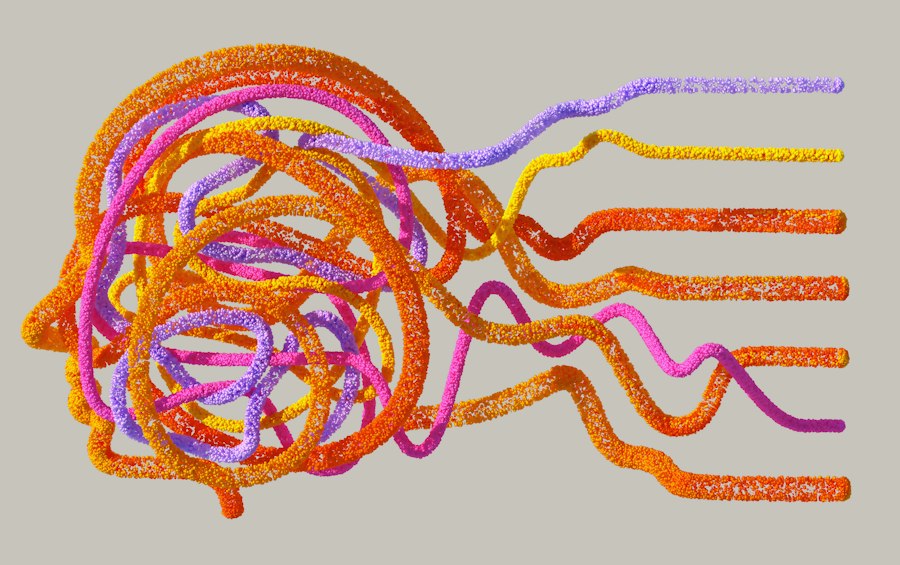
The brain employs a complex array of mechanisms to achieve its editorial function. These processes are not always conscious and often operate at a subconscious level, shaping our perceptions and recollections without our direct awareness.
Schema Theory and Expectation Bias
Our existing knowledge, organized into schemas (mental frameworks), heavily influences how we perceive and remember new information. When we encounter a new situation, our brain attempts to fit it into an existing schema. If the new information aligns with our expectations, it’s more likely to be remembered. If it deviates, it might be forgotten, distorted to fit the schema, or remembered as particularly salient because of its unexpected nature. This “expectation bias” is a powerful editor, often leading us to remember what we expect to see or hear, rather than what actually occurred. For example, if you expect a librarian to be quiet and reserved, you might misremember a perfectly friendly and outgoing librarian as being more subdued than they actually were.
Source Monitoring and Misattribution
Remembering what happened is one thing; remembering where or when we learned it is another. Source monitoring refers to the process of attributing memories to their correct source. Errors in source monitoring are common and can lead to misattribution, where we mistakenly attribute a memory to the wrong source. For instance, we might remember a piece of information but forget whether we read it in a newspaper, heard it from a friend, or even dreamed it. This can lead to false memories or unintentional plagiarism, as the brain “edits out” the original source while retaining the content. The brain prioritizes the information itself, sometimes at the expense of its contextual origin, further demonstrating its selective editorial approach.
Emotional Influence on Recall
Emotions play a significant role in the editorial process of memory. Highly emotional events tend to be remembered more vividly, but not necessarily more accurately. While the emotional core of an experience might be deeply etched, the peripheral details can be surprisingly prone to distortion. Flashbulb memories, for example, are vivid, detailed, and seemingly accurate recollections of shocking or significant events (like 9/11). However, research has shown that even flashbulb memories, despite their subjective vividness, can be inaccurate and change over time. The emotional intensity acts as a powerful editor, highlighting certain aspects while potentially obscuring others or even generating confabulations to fill in gaps. Our emotional state during retrieval can also influence how we recall past events, coloring them with our current feelings.
Practical Implications of the Editorial Brain
Recognizing that our brain is an editor, not an archive, has profound implications across various aspects of our lives, from the legal system to personal development.
Eyewitness Testimony: A Cautionary Tale
The fallibility of eyewitness testimony is one of the most critical implications of memory’s reconstructive nature. Jurors often place immense weight on eyewitness accounts, assuming they are accurate records of events. However, research consistently demonstrates that eyewitness memories are highly susceptible to suggestion, misinformation, and the passage of time. The act of recalling an event in a stressful situation, such as a courtroom, can further distort memories. Law enforcement and legal systems are increasingly acknowledging these vulnerabilities, leading to reforms in how eyewitnesses are interviewed and how their testimony is presented. Understanding the editorial brain means moving away from a naive trust in perfect recall and embracing methods that minimize the introduction of biases and misinformation.
Shaping Our Personal Narratives
Our personal identity is intricately linked to our memories. We construct a coherent narrative of our lives based on our recollections, but this narrative is constantly being edited and revised. As we grow, learn, and change, our understanding of past events shifts. We might reframe difficult experiences, emphasize certain successes, or downplay past failures. This ongoing editorial process allows us to create a self-narrative that is consistent with our current identity and aspirations. It’s a dynamic, self-serving editor, curating our life story to maintain a sense of self-coherence and purpose. This doesn’t mean we are deliberately lying to ourselves, but rather that our brain is actively constructing a meaningful and adaptive personal history.
The Power of Forgetting
While often seen as a deficit, forgetting is an essential part of the brain’s editorial process. It’s not simply a failure to retrieve information; it’s an active process of pruning and prioritizing. Forgetting allows us to discard irrelevant information, make room for new learning, and prevent our minds from being overwhelmed by a deluge of trivial details. Imagine trying to function if you remembered every single conversation, every single street sign, every single meal you’ve ever had. Forgetting is the brain’s way of decluttering its workspace, making it more efficient and effective. This selective erasure is a critical component of the editing function, ensuring that the most pertinent information is retained and readily accessible.
If you’re looking to improve your memory skills, the Memory Athlete website offers a wealth of resources and techniques. Many people have found success in enhancing their cognitive abilities through the methods shared by the experts at Memory Athlete. Whether you’re a beginner or an experienced memory enthusiast, this platform can help you reach new heights.
Enhancing Memory in an Editorial Landscape
Given that our brains are active editors, how can we work with this inherent reconstructive nature to improve our memory and cognitive function? The key is to understand how the editing process works and to provide our brains with the tools to create more robust and accurate “edits.”
Active Engagement and Elaboration
Passive reception of information leads to weak, easily forgotten memories. To create more durable memories, active engagement is crucial. This involves elaborating on new information, connecting it to existing knowledge, and engaging multiple senses. When we actively process information—explaining it in our own words, creating analogies, or visualizing it—we are essentially guiding the brain’s editorial process, helping it to construct a more detailed and interconnected memory trace. This makes the memory more resistant to distortion and easier to retrieve later. The more “tags” or connections a memory has, the more pathways there are for the brain to reconstruct it.
Retrieval Practice and Spaced Repetition
The act of recalling information is one of the most powerful ways to strengthen memory. Each time we retrieve a memory, we reinforce the neural pathways associated with it, making it easier to access in the future. This is why testing yourself is often more effective than simply re-reading material. Spaced repetition, where you review information at increasing intervals, further optimizes this process, ensuring that memories are consolidated over time and become more resistant to decay. This deliberate act of retrieval forces the brain to actively reconstruct the memory, essentially performing a “save” operation with each successful recall.
Mindfulness and Attention
Attention is the gateway to memory. We cannot remember what we do not attend to. Cultivating mindfulness—the practice of being present and fully engaged in the moment—can significantly improve our ability to encode new information. By focusing our attention, we provide the brain with richer, more detailed input, giving its editorial process more robust material to work with. Reducing distractions and consciously directing our focus are essential steps in creating higher-quality initial “drafts” of our memories, which the brain can then edit and refine more effectively.
The Power of Storytelling
Humans are inherently storytellers, and our brains are wired to remember narratives. When we organize information into a coherent story, it becomes more meaningful and easier to recall. This is because stories provide context, emotional resonance, and a logical flow that aids the brain’s reconstructive efforts. Think of mnemonic devices that weave seemingly unrelated items into a vivid narrative; these leverage our brain’s natural inclination to create coherent stories. By framing information in a narrative structure, we are essentially pre-editing it for our brains, making the recall process smoother and more reliable.
To wrap up, understanding that your brain is an editor, not a passive archive, fundamentally shifts how we approach memory. It reveals the dynamic, constructive, and often fallible nature of our recollections, while also highlighting the brain’s incredible efficiency and adaptability. Rather than being a weakness, this editorial capacity is a testament to our cognitive sophistication. By embracing this understanding and actively engaging with our memory processes, we can enhance our ability to learn, remember, and thrive. Elevate your memory and cognitive performance by downloading Memory Athlete, the ultimate app for mastering recall, sharpening focus, and unlocking your brain’s full potential.
FAQs
What does it mean that the brain is an editor, not an archive?
It means that the brain is constantly filtering, organizing, and prioritizing information rather than storing every single detail like an archive. It selectively retains and discards information based on relevance and importance.
How does the brain decide what information to keep and what to discard?
The brain uses various mechanisms such as attention, emotion, and repetition to determine what information is worth keeping. Important or frequently accessed information is more likely to be retained, while irrelevant or outdated information may be discarded.
Can the brain’s editing process be influenced or changed?
Yes, the brain’s editing process can be influenced by factors such as learning new information, forming strong emotional connections, and practicing recall. By actively engaging with information and experiences, individuals can shape how their brain edits and stores memories.
What are the potential benefits of understanding the brain as an editor?
Understanding the brain as an editor can help individuals improve their memory, decision-making, and cognitive abilities. By being aware of how the brain filters information, people can optimize their learning strategies and focus on retaining important knowledge.
How can individuals leverage the brain’s editing function to enhance their daily lives?
Individuals can leverage the brain’s editing function by practicing mindfulness, organizing information effectively, and engaging in activities that stimulate memory and cognition. By being mindful of what information they expose themselves to and how they process it, people can enhance their overall brain function and productivity.





Leave a Reply