
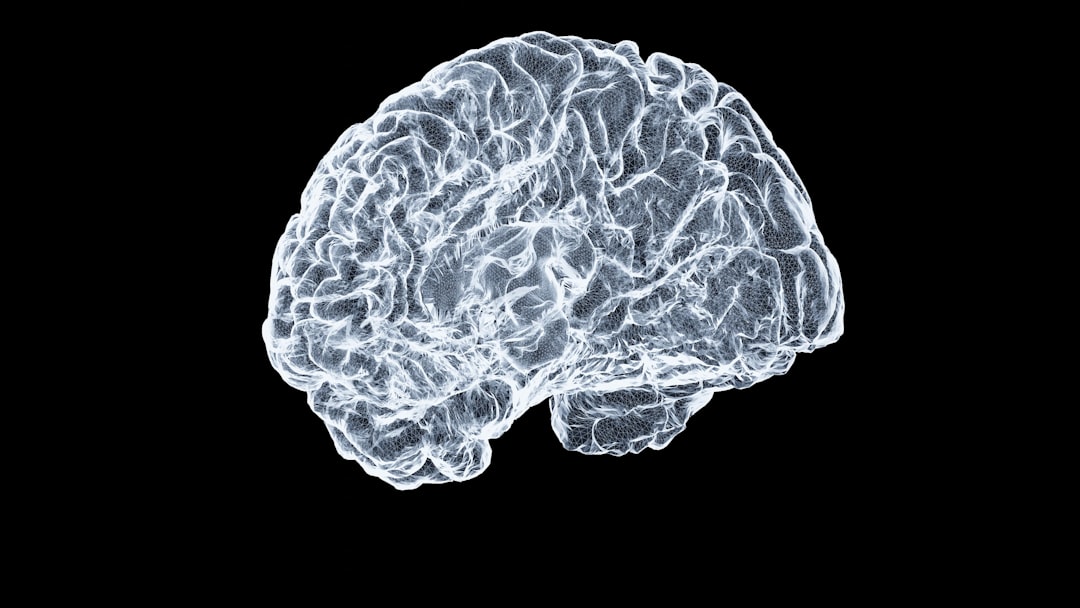
The ability to create & retrieve memories has a significant influence on the human mind, which is a complex tapestry of conscious and subconscious processes. Memory is not a straightforward recording device; rather, it is a dynamic, reconstructive process that is continuously updated and improved. Philosophers and scientists have been debating the mechanisms underlying this basic cognitive function for centuries. With the help of sophisticated genetic tools and cutting-edge imaging techniques, recent advances in neuroscience are finally starting to reveal the intricate cellular and molecular choreography that controls our individual histories.
The Phases of Memory Development: From Perception to Durability. Memory formation is a multi-stage process with unique neurological foundations, rather than a single event. This process starts with the first interaction with information and continues through long-term storage and eventual retrieval. The first spark is encoding.
Recent advancements in neuroscience have shed light on the intricate processes involved in memory formation, revealing how experiences are encoded, stored, and retrieved in the brain. For those interested in practical applications of these findings, an insightful article titled “How to Memorize a Deck of Cards Like a Pro” explores techniques that leverage these scientific principles to enhance memory skills. You can read more about these strategies and their connection to memory formation in the article here: How to Memorize a Deck of Cards Like a Pro.
The critical first step in converting sensory data into a format the brain can store is called encoding. Neural activity in different parts of the brain interacts intricately in this situation. The raw data is processed by the visual, auditory, and other sensory cortices when we observe an event. The hippocampus, a seahorse-shaped structure located deep within the temporal lobe, receives this information and is crucial in connecting these disparate sensory components into a cohesive memory trace. The Role of Attention: Information’s encoding strength is greatly influenced by how much attention we pay to it.
For example, shallow encoding & poor recall result from divided attention. Increased activity in the prefrontal and parietal cortices during focused attention is revealed by fMRI studies, indicating their function in sorting out irrelevant stimuli & ranking important information for hippocampal processing. Levels of Processing: How deeply information is processed also affects how memorable it is. Assigning meaning to information is known as semantic encoding, & it has been shown to be more efficient than rote memorization or other superficial processing.
Check out the amazing features of the Memory Athlete app for improving your memory skills.
Different neural signatures linked to semantic encoding have been found in magnetoencephalography (MEG) research, suggesting more pervasive connectivity patterns in cortical networks. Emotional Tagging: People tend to remember emotionally significant events more vividly and persistently. An important part of this emotional tagging is played by the amygdala, a tiny almond-shaped structure next to the hippocampus. It improves the consolidation of emotionally charged memories by modifying hippocampal activity. This explains why traumatic or extremely happy experiences frequently leave a lasting impression on our minds.
Recent advancements in neuroscience have shed light on the intricate processes involved in how memories are formed, revealing fascinating insights into the brain’s mechanisms. For those interested in enhancing their memory capabilities, an insightful article titled “How to Build an Effective Mental Pathway” provides practical techniques that can complement these scientific findings. By exploring the relationship between memory formation and mental pathways, readers can gain a deeper understanding of how to improve their cognitive skills. You can read more about these strategies in the article here.
| Neuroscience Finding | Description |
|---|---|
| Neural Plasticity | The brain’s ability to reorganize itself by forming new neural connections, crucial for memory formation. |
| Synaptic Consolidation | The process of strengthening the connections between neurons, leading to the formation of long-term memories. |
| Memory Encoding | The initial process of converting sensory information into a form that can be stored in the brain as a memory. |
| Memory Retrieval | The process of accessing stored memories, often influenced by cues and context. |
| Role of Hippocampus | The hippocampus plays a key role in the formation and retrieval of declarative memories, such as facts and events. |
Consolidation: From Fragile to Firm. A memory trace is initially brittle and vulnerable to interference once it is encoded. The process of stabilizing and transforming this unstable trace into a more durable representation is called consolidation. Synaptic consolidation & systems consolidation are the two primary timescales on which this happens.
Synaptic Consolidation: This quick process, which takes place minutes to hours after encoding, includes cellular and molecular alterations at the synaptic level. One important mechanism behind synaptic consolidation is long-term potentiation (LTP), which is a persistent strengthening of synaptic connections. The synapse between pre- and postsynaptic neurons becomes more effective at sending signals when they fire together frequently. This includes structural alterations to dendritic spines and the insertion of new AMPA receptors into the postsynaptic membrane. Systems Consolidation: This slower process, which involves the gradual transfer of memory dependence from the hippocampus to dispersed cortical networks, can take days, weeks, or even years.
First of all, the hippocampus is essential for retrieving recently created memories. Memories become less dependent on the hippocampus & more dependent on direct connections between cortical areas as they are repeatedly reactivated & incorporated into preexisting knowledge structures. This process is believed to be especially active during sleep, when hippocampal-cortical communication helps to strengthen and reorganize memories. The Cellular and Molecular Basis of Memory.
Complex molecular and cellular alterations within neurons and their connections are at the center of memory formation. Comprehending these mechanisms provides a comprehensive understanding of the physical storage of information in the brain. Learning is based on synaptic plasticity. Many people believe that the basic mechanism for memory storage is synaptic plasticity, the capacity of synapses to become stronger or weaker over time.
Because of its dynamic nature, the brain is able to adjust and gain knowledge from experience. Long-Term Potentiation (LTP): After high-frequency stimulation, LTP is a long-lasting increase in synaptic strength. A series of biochemical processes are involved, one of which is the activation of NMDA receptors, which permits calcium to enter the postsynaptic neuron. Downstream signaling pathways are triggered by this calcium surge, increasing synaptic transmission efficiency.
The wide range of molecules involved in maintaining LTP, such as protein kinases and modifications in gene expression that facilitate structural changes at the synapse, are still being discovered by research. On the other hand, a persistent decline in synaptic strength is referred to as long-term depression (LTD). LTD weakens connections while LTP strengthens them, which is equally important for effective memory operation. Because our brains are continuously inundated with information, LTD enables the pruning of less significant or irrelevant connections, preventing saturation and promoting the formation of new memories.
In contrast to LTP, LTD is frequently brought on by low-frequency stimulation & entails receptor internalization and distinct calcium signaling pathways. The Long-Term Storage Solution: Gene Expression and Protein Synthesis. While initial memory traces depend heavily on synaptic modifications, long-term memory persistence necessitates more persistent changes.
This includes both the synthesis of new proteins and the control of gene expression. Activity-Dependent Gene Expression: Certain genes are overexpressed when a neuron is actively encoding a memory. These “immediate early genes” (IEGs), such as Arc and c-Fos, are quickly expressed and contribute to the start of the structural alterations required for long-term memory. The number & form of dendritic spines, as well as the makeup of neurotransmitter receptors, are all impacted by the proteins that these genes encode.
Protein Homeostasis: Continuous protein synthesis and degradation are necessary to sustain synaptic strength & neuronal integrity over long periods of time. Memory problems are frequently correlated with disruptions in this delicate balance, such as those seen in neurodegenerative diseases. Research on the particular proteins involved in memory maintenance and their turnover rates is ongoing and has implications for the creation of therapeutic interventions. The function of particular brain areas in memory.
Although the hippocampus plays a major role, memory formation involves a dispersed network of brain regions, each of which performs a distinct function. The hippocampus is the gateway to memory. The hippocampus, sometimes known as the brain’s “memory gateway,” is essential for the development of new declarative memories, or memories of facts & events. Its highly ordered circuitry and distinctive anatomical structure make it easier to integrate various sensory inputs. Pattern Separation & Completion: It is believed that the hippocampus is responsible for important calculations such as pattern separation and pattern completion.
Pattern separation keeps memories from interfering by enabling us to discern between similar experiences. On the other hand, we can retrieve a whole memory from a partial cue through pattern completion. For precise and effective recall, these functions are essential. In addition to declarative memory, the hippocampus plays a significant role in spatial memory and navigation.
The hippocampus’s “place cells” create a cognitive map of the surroundings by firing only when an animal is in a specific spatial location. This link emphasizes how crucial it is for memories to be linked to their context in order for evolution to occur. The Long-Term Archive: The Cortex. The neocortex is thought to be the ultimate long-term storage location for consolidated declarative memories, whereas the hippocampus serves as a temporary buffer and integrator for new memories.
Distributed Storage: It is believed that memories are dispersed throughout different cortical regions, representing the modality of the initial experience, rather than being kept in a single “engram” location. For example, auditory memories are probably stored in auditory cortices, while visual memories are probably stored in visual cortices. Semantic Networks: As memories are integrated & consolidated over time, they become a part of semantic networks, which enable us to develop a comprehensive understanding of the world. Here, discrete facts and occurrences come together to form more comprehensive ideas & knowledge. Because of its involvement in working memory and executive functions, the prefrontal cortex is especially crucial for organizing and retrieving these intricate semantic memories.
The impact of sleep on memory. Sleep is an active state that is essential for memory consolidation and optimization, not just a time of inactivity. Recent studies demonstrate how profoundly it affects memory’s structural and functional components. Reactivation and Replay: Hippocampal neurons that were active during learning replay their patterns of activity during non-REM sleep, especially slow-wave sleep. It is believed that this “replay” strengthens & integrates those memories into long-term storage by facilitating the transfer of memory traces from the hippocampus to the cortex. Studies using electroencephalography (EEG) have revealed that during these replay events, the hippocampus & neocortex exhibit coordinated activity.
Also, sleep is essential for maintaining synaptic homeostasis. Sleep appears to renormalize synaptic weights, whereas wakefulness is linked to a net increase in synaptic strength. It is believed that this “synaptic downscaling” is crucial for preserving a healthy dynamic range for synaptic plasticity, avoiding saturation, & enhancing the brain’s ability to learn new information. An ineffective, “noisy” brain may result from excessive synaptic strengthening.
Memory Triage: In addition to consolidation, sleep may play a role in “memory triage,” which is the selective strengthening of significant memories and the weakening of less significant ones. This process optimizes memory systems for effective recall and future learning, possibly through targeted synaptic downscaling. New Directions in Memory Studies.
The study of memory neuroscience is always changing as new tools and techniques push the limits of our comprehension. Chemogenetics and Optogenetics: Accurate Management. With previously unheard-of precision, researchers can remotely regulate neuronal activity thanks to optogenetics and chemogenetics. Scientists can use light or particular medications to turn neurons on or off by genetically altering particular neurons to express ligand-gated receptors (chemogenetics) or light-sensitive proteins (optogenetics). Modifying Memory Traces: These methods have been crucial in proving the causal role of particular neural circuits in the creation and retrieval of memories.
For instance, memory engrams in animal models have been artificially activated or suppressed by researchers, resulting in the recall or suppression of particular memories. The physical basis of memory is strongly supported by this. Understanding Memory Pathologies: These tools provide new ways to explore the mechanisms of memory impairment and to identify possible therapeutic targets by selectively altering neuronal activity in models of memory disorders. Computational modeling and multi-region recording: insights at the systems level. A more comprehensive “systems-level” understanding of memory is being made possible by new techniques that enable the simultaneous recording of neuronal activity from various brain regions in conjunction with advanced computational modeling. Large-Scale Neural Networks: These methods aid in the understanding of how various brain regions interact and coordinate their activity at different memory stages.
Comprehending the integration & retrieval of distributed memory traces requires an understanding of these vast networks. Decoding Memory Representations: To decipher memory content from continuous brain activity, sophisticated machine learning algorithms are being used. This enables researchers to predict what a person is remembering or even find neural signatures linked to particular memories.
Future Research on Memory: Uses & Consequences. The knowledge gained from current memory research has significant ramifications for everything from learning strategy optimization to therapeutic interventions for memory disorders. Treatments for Memory Disorders: New treatments for Alzheimer’s disease, dementia, and other disorders marked by memory loss are being made possible by a better understanding of the molecular and cellular mechanisms of memory formation. This includes pharmacological treatments intended to improve gene expression or synaptic plasticity.
Improving Education and Learning: Educational practices can be informed by knowledge of efficient encoding and consolidation techniques, which will improve learning and information retention. Memory neuroscience, for example, is the foundation for methods that encourage deep processing & spaced repetition. Brain-Computer Interfaces for Memory Restoration: In the far future, developments in brain-computer interfaces may make it possible to implant new memories or even restore ones that have been lost, but these possibilities raise important ethical questions. The scientific investigation of the architecture of remembrance is still in progress.
The remarkable complexity & adaptability of the human brain are revealed by each new discovery, which adds another thread to the complex tapestry of our understanding. Beyond simple cognition, the capacity to create, store, and retrieve memories defines who we are, how we perceive the past, & how we navigate the future. In addition to a better understanding of ourselves, the ongoing investigation of these basic mechanisms holds the promise of reducing suffering and opening up new avenues for human endeavor.
.





Leave a Reply