
The Elusive Blueprint of Childhood
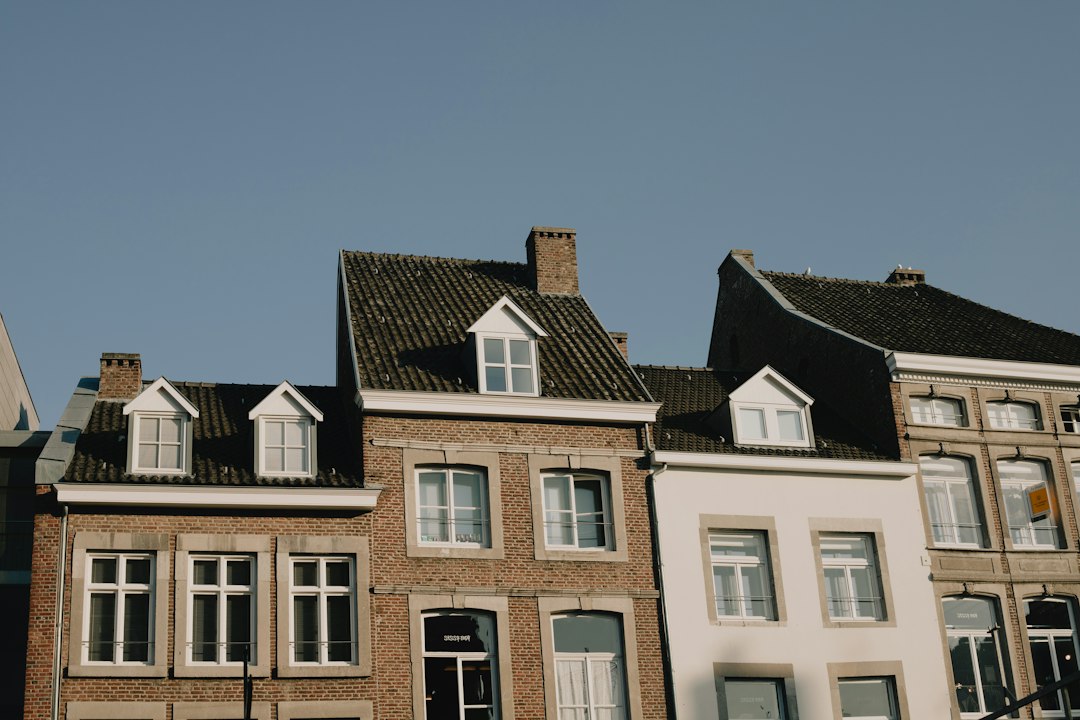
Memory, a notoriously unreliable architect, often renders our most cherished spaces not as precise blueprints, but as fragmented impressions. The “half-remembered home” is a testament to this phenomenon – a dwelling that exists more vividly in the mind’s eye as a collection of sensory details, emotional resonances, and spatial ambiguities, rather than a perfectly recalled structure. This isn’t merely a failing of recall; it’s an active, creative process where the mind reconstructs, embellishes, and omits, guided by the currents of nostalgia, trauma, joy, and the passage of time. The architecture of such a home is less about bricks and mortar and more about the interplay of light and shadow, the echo of laughter, the scent of a particular flower, or the rough texture of a beloved carpet. It’s a space that is intensely personal, reflecting not just what was, but what we remember wanting it to be, or what we later understood it to have been.
This mental reconstruction often highlights certain features while blurring others into oblivion. Perhaps a grand staircase, a secret nook, or a window overlooking a particular view remains sharply defined, while the precise layout of bedrooms or the color of kitchen cabinets fades into a general impression. These selective memories are not random; they are often tied to significant events, recurring rituals, or powerful emotional experiences. The corner where a parent read stories, the door through which an important visitor always entered, the garden path where a childhood secret was shared – these locations become anchor points, around which the rest of the dwelling coalesces, albeit imperfectly. The “half-remembered home” is, therefore, a deeply subjective landscape, a fluid entity that shifts and reforms with each attempt to revisit it in the mind. It’s a place that continues to live and breathe, not in its physical manifestation, but in the intricate and often contradictory narratives we construct around it.
The Sensory Echoes of a Forgotten Floor Plan
The power of the half-remembered home often lies not in visual accuracy, but in the rich tapestry of sensory information that accompanies these fragmented images. The musty smell of the attic, the lingering scent of dinner from the kitchen, the unique feel of a worn banister under small hands – these tactile and olfactory memories can be far more potent and enduring than any precise visual recollection of a room’s dimensions or the arrangement of its furniture. It is through these sensory echoes that the mind attempts to fill in the gaps of a fading floor plan, creating an immersive, if somewhat imprecise, experience of the space. A particular creak in the floorboards might instantly transport one back to a specific moment, or the way sunlight streamed through a window at a certain time of day can evoke a powerful sense of comfort or melancholy.
These sensory details are often the last remnants of a forgotten physical layout, acting as emotional signposts within the mental architecture. The sound of rain on a specific windowpane might bring back feelings of coziness and security, even if the exact room it belonged to is now indistinct. The taste of a particular treat associated with a certain room can imbue that space with a nostalgic sweetness. This reliance on non-visual cues highlights the multifaceted nature of memory itself, demonstrating how our brains piece together a coherent experience of the past not just through sight, but through a complex interplay of all our senses. The half-remembered home, in this sense, is not just seen, but felt, heard, smelled, and sometimes even tasted, creating a multisensory phantom dwelling that continues to resonate long after its physical counterpart has changed or disappeared.
In exploring the themes presented in “The Architecture of a Half-Remembered Home,” readers may find it insightful to delve into the related article on the evolving role of artificial intelligence in memory training. This piece discusses how advancements in AI technology can enhance our ability to recall and organize memories, paralleling the intricate relationship between architecture and memory in our personal spaces. For more information, you can read the article here: The Future of AI in Memory Training.
The Shifting Sands of Emotional Resonance
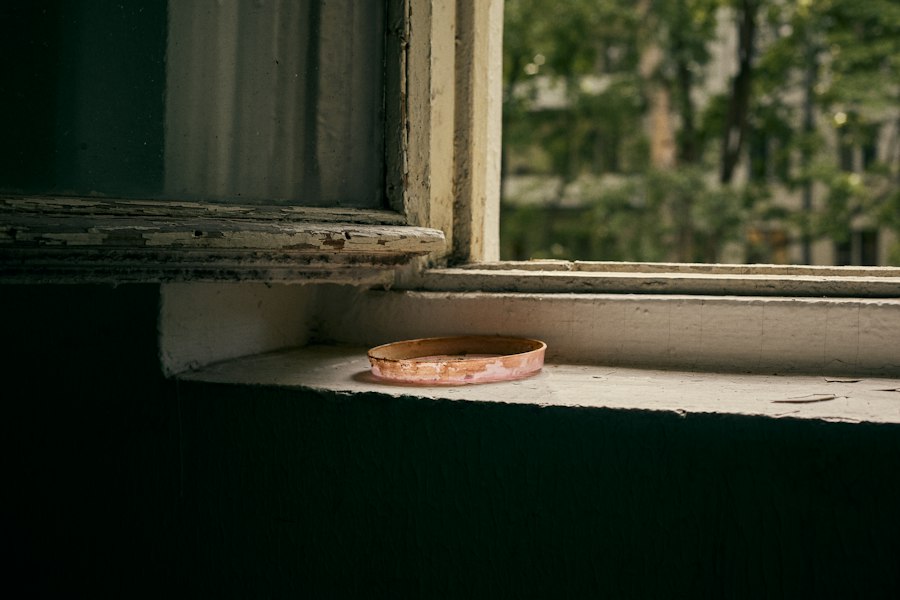
The emotional landscape of the half-remembered home is perhaps its most defining characteristic. Unlike a photograph or a meticulously drawn floor plan, our mental dwelling is heavily imbued with the feelings and experiences that occurred within its walls. A room that once felt vast and full of possibility might, in adult recollection, shrink to a more modest size, yet retain the emotional weight of childhood wonder. Conversely, a confined space that felt oppressive in youth might later be remembered with a bittersweet nostalgia, recalling a period of intense personal growth or comforting intimacy. This emotional overlay acts as a filter, shaping the very dimensions and atmosphere of the remembered space. It’s not just what happened, but how we felt about what happened, that dictates the contours of this mental architecture.
For instance, a hallway might be recalled as unusually long and dark if it was a place of apprehension or fear, perhaps leading to a parent’s angry voice or a perceived punishment. Yet, the same hallway could also be remembered as a joyful race track if it frequently witnessed playful chases with siblings. The very same physical space can hold contradictory emotional memories, resulting in a somewhat schizophrenic mental blueprint. This dynamic interplay means that the architecture of a half-remembered home is rarely static; it evolves as our understanding of our past and our emotional relationship with it changes over time. A traumatic event associated with a particular room can cause that space to be blurred, distorted, or even deliberately suppressed in memory, its features becoming hazy and ill-defined as the mind attempts to protect itself from reliving the pain.
The Amplification and Attenuation of Significance
Within the emotional landscape of a half-remembered home, certain areas become amplified in their significance, while others are attenuated to the point of near invisibility. The kitchen, often the heart of domestic life, might be remembered in vivid detail, not because of its precise layout, but because of the warmth, sustenance, and family gatherings it hosted. The smell of baking, the sound of sizzling food, the clatter of dishes – these sensory details coalesce into a powerful emotional nexus. Conversely, a guest bedroom rarely used might fade into a generic, unremarkable space, its details unessential to the core narrative of one’s upbringing. The mind prioritizes memory based on emotional impact, creating a hierarchy of architectural features.
This amplification and attenuation extend beyond entire rooms to specific objects or areas within a room. A particular armchair where stories were read might be rendered in exquisite detail, its pattern, texture, and very presence radiating comfort and security, even as the rest of the living room remains a general blur. A specific toy box, a window seat, or a spot on the carpet where a pet always lay can become emotionally charged focal points, around which the surrounding architecture is reconstructed. These significant elements act as emotional anchors, allowing the mind to rebuild a semblance of the home from the ground up, prioritizing feeling over factual accuracy. The half-remembered home is thus a testament to the fact that memory is not a passive recording device, but an active interpreter, constantly editing and prioritizing based on emotional salience.
The Influence of Narrative and Retrospection
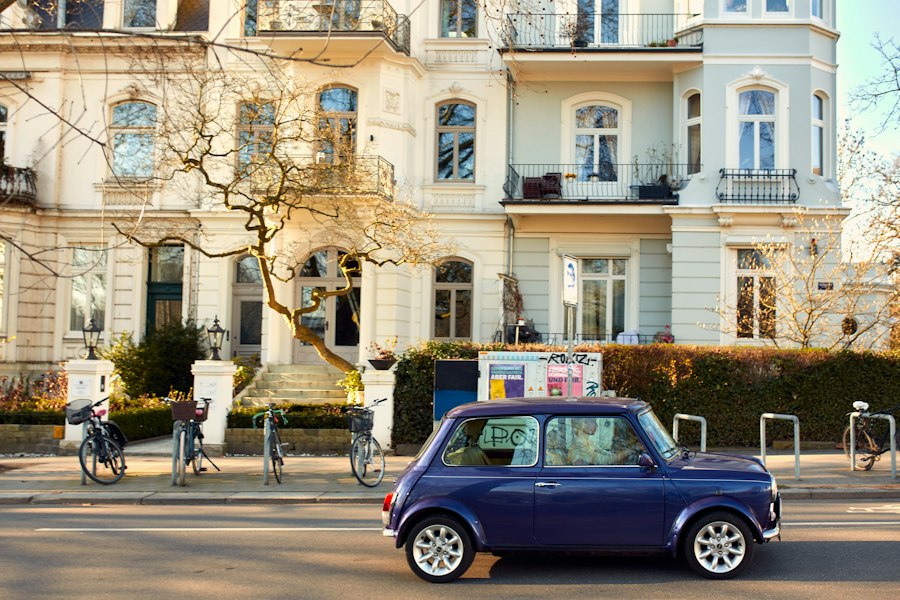
Our understanding of the half-remembered home is profoundly shaped by the narratives we construct around our past. As we grow older, we inevitably weave our childhood experiences into a larger life story, and this narrative lens influences how we recall and reconstruct the spaces of our youth. The “architecture” of this mental dwelling becomes less about objective spatial reality and more about its role within our personal mythology. For instance, if one’s personal narrative emphasizes a happy, idyllic childhood, the remembered home might be bathed in a warm, inviting light, with perhaps a slightly exaggerated sense of spaciousness and comfort, even if the actual dwelling was modest. Conversely, a narrative centered on struggle or discontent might render the home as cramped, dark, or restrictive, even if objectively it offered ample space.
This retrospective influence means that the half-remembered home is not a static memory, but a dynamic construct that can shift and evolve with our changing self-perception and understanding of our past. A detail once considered insignificant might gain prominence years later as it connects to a newly understood aspect of one’s personality or a pivotal life event. The act of sharing childhood memories with others, or even encountering old photographs, can also significantly alter the remembered architecture. A photo might correct a spatial inaccuracy but simultaneously introduce a new emotional layer, confirming some details while contradicting others, leading to a further reconstruction of the mental blueprint. The home, in this sense, is a living story, continuously being revised and re-edited.
The Editing Bay of Time
Time, the ultimate editor, plays a crucial role in shaping the architecture of the half-remembered home. With each passing year, details fade, rooms blur, and the precise relationships between spaces become increasingly tenuous. This natural process of decay is not simply a loss of information; it’s an active editing process where the brain prioritizes, prunes, and consolidates. Less frequently accessed memories become weaker, while those revisited often, perhaps in recurring dreams or nostalgic reflections, might be reinforced, albeit sometimes inaccurately. The brain, in its efficiency, fills in blanks with plausible generalizations or composites of similar experiences, leading to a homogenized, yet emotionally coherent, mental dwelling.
The editing bay of time also allows for a degree of idealization or romanticization. The hardships or imperfections of a childhood home might soften over the years, replaced by a more palatable or emotionally resonant version. The leaky roof or the peeling paint might be forgotten, while the cozy fireplace or the sunlit breakfast nook becomes the dominant feature. This selective memory serves a psychological purpose, often allowing individuals to hold onto a more comforting or inspiring version of their past. However, time can also work in the opposite direction, revealing previously suppressed memories or recontextualizing past events, thereby altering the emotional weight and even the perceived physical characteristics of the home. The half-remembered home is thus a testament to memory’s fluid nature, constantly undergoing revisions in the quiet editing bay of our minds.
If you’re looking to improve your memory skills, the Memory Athlete website offers a wealth of resources and techniques. Many people have found success by following the strategies outlined on the Memory Athlete platform. Whether you’re a beginner or an experienced memorizer, the Memory Athlete community can help you reach your goals.
The Architecture of Dreams and Imagination
Beyond conscious recall and narrative influence, the half-remembered home frequently manifests in the realm of dreams and imagination, where its architecture takes on a particularly surreal and fluid quality. In dreams, the laws of physics and logic often bend, allowing rooms to appear and disappear, hallways to extend infinitely, and familiar spaces to merge with entirely new, fantastical elements. These dream dwellings, while often unsettling in their illogicality, frequently draw upon the fragmented architecture of our childhood homes, recycling familiar doors, windows, or furniture arrangements in unexpected contexts. This suggests that the brain continues to process and reconstruct these spaces even during sleep, attempting to make sense of the past through symbolic and often metaphorical structures.
In waking imagination, particularly when indulging in nostalgia or creative reflection, the half-remembered home provides a rich canvas. Writers, artists, and musicians often tap into these mental spaces, using their ambiguities and emotional charge as inspiration. The imprecise nature of these memories allows for creative license, enabling the imagination to fill in the gaps with elements that serve a particular artistic purpose, whether it’s creating a sense of wonder, mystery, or melancholy. This imaginative reconstruction isn’t about factual accuracy; it’s about exploring the emotional and symbolic weight of “home” itself, leveraging the fragmented blueprint to build new narratives and evoke universal feelings. The architecture of the half-remembered home thus serves as a fertile ground for creative exploration, where personal memory intersects with universal themes of belonging, loss, and identity.
The Metaphorical Rooms of Self
The half-remembered home, particularly in its dream and imaginative forms, often functions as a powerful metaphor for the self. Each room, hallway, or hidden nook can represent different aspects of one’s personality, different stages of life, or different emotional states. The “attic” might symbolize forgotten memories or repressed thoughts, while the “basement” could represent deeper, unconscious desires or fears. A “locked door” might signify an aspect of oneself that remains unexplored or inaccessible, while a “window overlooking a distant landscape” could speak to aspirations and future possibilities. This metaphorical interpretation suggests that our childhood homes are not merely physical structures in our minds, but intricately linked to our evolving sense of self.
The ambiguities and shifting dimensions of the half-remembered home in dreams further reinforce this metaphorical connection. A suddenly expanding room might symbolize personal growth or a newfound sense of freedom, while a shrinking space could indicate feelings of constraint or anxiety. The presence or absence of others in these dream dwellings also carries significant symbolic weight, reflecting relationships and interactions from the past that continue to shape the present self. Thus, the architecture of the half-remembered home becomes a living, breathing map of our inner world, its fragmented nature mirroring the complex, sometimes contradictory, and ever-evolving landscape of human identity. It is a powerful reminder that our connection to the spaces of our past is deeply intertwined with our understanding of who we are.
In exploring the themes presented in “The Architecture of a Half-Remembered Home,” one can find intriguing parallels in the article on effective techniques for memorization. This piece delves into strategies that enhance cognitive recall, which resonates with the nostalgic elements of memory and place discussed in the original work. For those interested in improving their memory skills, the insights offered in this article can be quite beneficial. You can read more about it in this related article.
Reconstructing the Fragmented Blueprint
| Metric | Description | Value | Unit |
|---|---|---|---|
| Number of Rooms | Total rooms recalled in the half-remembered home | 7 | Rooms |
| Memory Clarity | Degree of vividness in recalling architectural details | 65 | Percent |
| Age of Home | Estimated age based on architectural style | 45 | Years |
| Recall Frequency | Number of times the home is remembered per month | 3 | Times/Month |
| Architectural Style | Dominant style elements identified | Mid-century Modern | N/A |
| Emotional Attachment | Subjective rating of emotional connection to the home | 8 | Scale 1-10 |
| Structural Integrity | Estimated condition if the home still existed | 70 | Percent |
Attempting to reconstruct the fragmented blueprint of a half-remembered home is a deeply personal and often revealing exercise. It’s less about achieving perfect accuracy and more about engaging with the process of memory itself – understanding its limitations, appreciating its creative power, and acknowledging the emotional weight it carries. This reconstruction can take various forms, from drawing rudimentary floor plans to writing detailed descriptions, or even revisiting old photographs and, if possible, the physical location itself. Each method offers a different lens through which to view the mental dwelling, often uncovering previously forgotten details or revealing new emotional resonances.
When attempting to draw a floor plan, for example, the immediate challenge is often the spatial relationships between rooms. Were the bedrooms on the same side of the house? How did the living room connect to the kitchen? The mind struggles to resolve these ambiguities, often revealing gaps where a continuous flow of space should be. This act of drawing forces a confrontation with the true “half-remembered” nature of the dwelling, highlighting the areas of clarity and the regions of profound blurriness. Similarly, writing detailed descriptions can bring forth sensory details – the specific sound of the front door closing, the particular light in a certain room at dusk – that might not emerge during a purely visual recall. These exercises are not about fixing memory, but about understanding its unique, fragmented architecture.
The Role of Artifacts and Shared Memories
Artifacts play a crucial role in aiding the reconstruction of the half-remembered home. Old photographs, even grainy black and white ones, can act as powerful catalysts, immediately correcting spatial inaccuracies or bringing forth a flood of associated memories. A photo of a specific room might not only remind one of its layout but also trigger recollections of the furniture, the activities that took place there, and the emotions associated with those moments. Letters, diaries, or even children’s drawings can also provide valuable clues, offering textual or visual anchors around which the mental architecture can begin to coalesce. These artifacts are not just passive records; they are active participants in the memory reconstruction process, often revealing details that were thought to be lost forever.
Equally powerful are shared memories with family members or friends who also inhabited the home. Discussing the layout, the quirks, or specific events can lead to a collective reconstruction, where individual fragments piece together to form a more complete, albeit still subjective, picture. One person might remember the color of the kitchen walls, while another recalls the creak of the stairs, and a third remembers a specific toy hidden in a closet. This collaborative effort often highlights the subjective nature of memory, as different individuals will have prioritized different aspects of the same space, leading to a rich tapestry of overlapping and sometimes conflicting recollections. The act of sharing and comparing these memories is not just about getting the facts right; it’s about co-creating a shared narrative of a cherished space, further cementing its architecture in the collective consciousness. This process transforms the deeply personal half-remembered home into a shared cultural artifact, allowing its fragmented blueprint to be continually rebuilt and reinterpreted through the lens of collective nostalgia and familial bonds.
To wrap up, invite readers to elevate their memory and cognitive performance by downloading Memory Athlete, the ultimate app for mastering recall, sharpening focus, and unlocking their brain’s full potential.
Just as we reconstruct the fragmented blueprint of our childhood homes, piecing together sensory details, emotional resonances, and narrative influences, our brains are constantly engaged in the intricate architecture of memory. This capacity for recall, focus, and cognitive agility isn’t fixed; it can be actively honed and expanded. If the exploration of the half-remembered home has sparked your curiosity about the incredible power of your own mind, imagine what you could achieve with dedicated training.
Elevate your memory and cognitive performance by downloading Memory Athlete, the ultimate app for mastering recall, sharpening focus, and unlocking your brain’s full potential. Transform your mental landscape from a series of fragmented impressions into a meticulously designed palace of memory, ready to store and retrieve information with unparalleled precision. Discover the secrets to exceptional mental clarity and unleash the full capabilities of your brain today.
FAQs
What is the main theme of “The Architecture of a Half-Remembered Home”?
The main theme of the article revolves around the exploration of memory and nostalgia as they relate to the physical spaces we inhabit. It delves into how our recollections of homes, both real and imagined, shape our identities and emotional landscapes.
How does the article describe the relationship between memory and architecture?
The article describes the relationship between memory and architecture as a complex interplay where physical structures evoke personal histories and emotional responses. It suggests that architecture serves as a canvas for our memories, influencing how we perceive and interact with our past.
What role does nostalgia play in the context of the article?
Nostalgia plays a significant role in the article by highlighting how it can transform our perception of spaces. It emphasizes that nostalgic feelings can enhance our connection to places, making them feel more significant and layered with meaning, even if they are only half-remembered.
Are there any specific architectural styles mentioned in the article?
Yes, the article mentions various architectural styles that evoke different memories and emotions, such as Victorian, mid-century modern, and rustic designs. Each style is discussed in terms of how it resonates with personal experiences and collective memory.
What insights does the article provide about the impact of personal experiences on architectural perception?
The article provides insights that personal experiences significantly shape how individuals perceive and relate to architecture. It argues that our unique histories and emotional connections to spaces influence our interpretations and attachments to different architectural forms, making each person’s experience distinct.



Leave a Reply