

The Enigmatic Fourth Fundamental Circuit Element
For decades, electrical engineering students have learned about the three fundamental passive circuit elements: the resistor, the capacitor, and the inductor. Each defines a unique relationship between two key electrical quantities: voltage (V), current (I), charge (Q), and magnetic flux (Φ). The resistor relates voltage and current (Ohm’s Law: V=IR). The capacitor relates charge and voltage (Q=CV). The inductor relates magnetic flux and current (Φ=LI). This elegant tripartite system formed the bedrock of circuit theory, seemingly complete and immutable. However, in 1971, electrical engineer Leon Chua published a groundbreaking theoretical paper titled “Memristor – The Missing Circuit Element,” proposing the existence of a fourth fundamental passive element. This “missing link” would relate magnetic flux and electric charge, completing the symmetrical relationships between all four electrical quantities. Chua named this hypothetical device the “memristor,” a portmanteau of “memory resistor,” due to its unique ability to “remember” the amount of charge that has passed through it, thereby changing its resistance.
For nearly 37 years, the memristor remained a theoretical curiosity, a mathematical elegance without a physical manifestation. Its existence was hotly debated, with many questioning whether a physical device could truly exhibit the characteristics Chua described. The skepticism was understandable; the device’s defining characteristic was a resistance that depended on its past electrical history, a non-linear and non-volatile memory effect previously unseen in fundamental circuit components. It wasn’t until 2008 that a team at Hewlett-Packard (HP) Labs, led by R. Stanley Williams, announced the experimental realization of a solid-state memristor based on a thin film of titanium dioxide. This announcement sent shockwaves through the scientific and engineering communities, validating Chua’s decades-old theory and opening up a new frontier in electronics. The HP memristor demonstrated a resistance that could be modulated by the direction and magnitude of the current flowing through it, and critically, retained that resistance state even when power was removed. This non-volatile memory characteristic is what truly sets memristors apart and makes them so promising for future computing architectures. The implications of this discovery were profound, suggesting a fundamental shift in how we might design and build electronic systems, moving beyond the traditional Von Neumann architecture that separates processing and memory.
Defining Characteristics and Mathematical Foundation
At its core, a memristor is a two-terminal passive electrical component that relates magnetic flux (Φ) and electric charge (Q). Its defining property is that its resistance, often referred to as memristance (M), is not constant but depends on the history of the charge that has passed through it. Mathematically, this can be expressed as:
M(Q) = dΦ/dQ
Where M(Q) is the memristance, Φ is the magnetic flux, and Q is the electric charge. This equation shows that the memristance is the rate of change of magnetic flux with respect to charge. In practical terms, this means that applying a voltage or current across the memristor causes charges to flow, which in turn alters the internal state of the device, thereby changing its resistance. When the power is removed, the internal state (and thus the resistance) remains, providing non-volatile memory.
Another way to understand the memristor’s behavior is through its current-voltage (I-V) characteristic curve. Unlike a simple resistor, which has a linear I-V curve passing through the origin, a memristor exhibits a pinched hysteresis loop in its I-V plane when subjected to a periodic voltage or current. This “pinched” shape, passing through the origin, is a tell-tale signature of a memristor. The area enclosed by the loop represents the energy dissipated during a cycle, and the fact that it passes through the origin indicates that it’s a passive device. The width of the loop and the extent of the “pinching” are indicative of the device’s memory characteristics and how its resistance changes over time and charge flow. This hysteresis is fundamentally different from that observed in ferromagnets, which is due to energy storage and release, whereas in memristors, it relates to the state-dependent resistance.
Types and Physical Implementations
While the HP Labs titanium dioxide memristor was the first widely recognized physical realization, the term “memristor” can apply to a broader class of devices that exhibit state-dependent resistance and non-volatile memory. Since 2008, research has exploded, exploring various materials and mechanisms. The original HP device utilized a thin film of titanium dioxide (TiO2) sandwiched between two platinum electrodes. One layer of TiO2 was oxygen-deficient (doped with oxygen vacancies, making it semiconducting), and the other was stoichiometric (insulating). When a voltage is applied, oxygen vacancies (which carry a positive charge) drift, changing the thickness of the doped region. This change in the effective thickness of the semiconducting region alters the overall resistance of the device. More vacancies in the channel lead to lower resistance, and fewer vacancies lead to higher resistance.
Beyond titanium dioxide, numerous other materials have been investigated, including various metal oxides (e.g., TaOx, HfOx, NiOx, ZrOx), phase-change materials, organic semiconductors, and even 2D materials like graphene. The underlying mechanisms vary, but often involve ionic migration, phase transitions, ferroelectric effects, or quantum tunneling. Each material system offers unique advantages in terms of switching speed, power consumption, retention time, and scalability. For instance, some materials offer faster switching, while others provide greater resistance contrast or better endurance. The active research in this area continues to uncover new materials and device architectures that push the boundaries of memristor performance. The goal is to develop robust, manufacturable, and energy-efficient memristors that can be integrated into large-scale computing systems.
In addition to understanding memristors and their role in memory storage, readers may find it insightful to explore the article titled “Unlocking the Power of Pi: Memorization Techniques,” which delves into various methods of enhancing memory retention and cognitive skills. This article provides practical techniques that can complement the theoretical concepts presented in “Memristors Explained: Hardware That Remembers.” For more information, you can read the article here: Unlocking the Power of Pi: Memorization Techniques.
The Promise of Non-Volatile Memory and Beyond
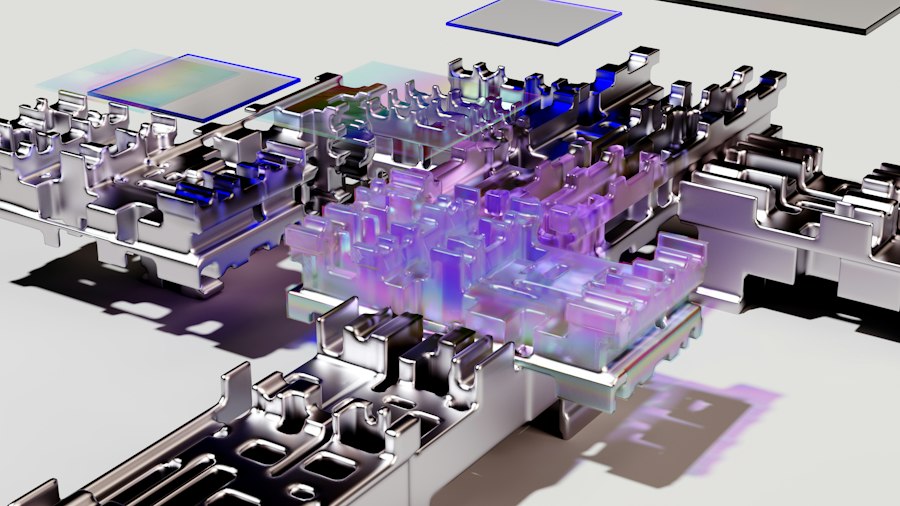
The most immediate and apparent application for memristors lies in their non-volatile memory capabilities. Unlike traditional DRAM (Dynamic Random Access Memory) which requires constant refreshing and loses data when power is off, or Flash memory which has limited endurance and slower write speeds, memristors offer a compelling alternative. They can retain their resistance state, and thus stored data, indefinitely without power consumption. This “instant-on” capability, where devices would power up immediately to their last state, is a significant advantage for consumer electronics and embedded systems.
Moreover, memristors exhibit excellent scalability, meaning they can be manufactured at extremely small dimensions, potentially surpassing the limits of current semiconductor technology. They can also be stacked in 3D architectures, dramatically increasing memory density per unit area. This high density, combined with their non-volatility, positions memristors as a strong contender for next-generation universal memory, potentially unifying the roles of RAM and storage in a single device. Such a universal memory could lead to unprecedented improvements in system performance, energy efficiency, and cost by eliminating the bottlenecks associated with moving data between separate memory and storage units.
Towards In-Memory Computing
One of the most revolutionary aspects of memristors is their potential to enable “in-memory computing” or “processing-in-memory.” The traditional Von Neumann architecture, which dominates modern computers, separates the central processing unit (CPU) from memory. Data must constantly shuttle back and forth between these two components, leading to a significant bottleneck known as the “Von Neumann bottleneck” or “memory wall.” This data movement consumes a considerable amount of energy and time, limiting the overall performance and efficiency of computing systems, especially for data-intensive tasks like artificial intelligence (AI) and machine learning.
Memristors, with their ability to perform computation directly within the memory fabric, offer a way to circumvent this bottleneck. Imagine a memory array where the stored data (resistance states) can also be used to perform logical operations. For example, by applying appropriate voltages, memristor arrays can perform Boolean logic operations (AND, OR, NOT, etc.) directly where the data resides. This parallel, in-situ computation could lead to orders of magnitude improvements in energy efficiency and speed for certain types of workloads. This is particularly exciting for AI accelerators, where repetitive matrix multiplications and vector-matrix operations are core to neural network computations. Memristor crossbar arrays, for instance, can naturally perform analog matrix multiplication by exploiting Ohm’s and Kirchhoff’s laws, offering a powerful hardware accelerator for AI.
Neuromorphic Computing and Artificial Synapses
Perhaps the most ambitious and biologically inspired application of memristors is in neuromorphic computing. This field aims to build computer systems that mimic the structure and function of the human brain. The brain is incredibly energy-efficient and adept at tasks like pattern recognition, learning, and adaptation, capabilities that traditional computers struggle with. Neurons in the brain communicate through synapses, which are connections whose strength can be modified over time – a process known as synaptic plasticity, crucial for learning and memory.
Memristors exhibit properties strikingly similar to biological synapses. Their resistance can be gradually tuned (strengthened or weakened) based on the history of electrical signals passing through them, just like synaptic strength changes based on neural activity. By arranging memristors in crossbar arrays, researchers can create artificial neural networks where each memristor acts as a synapse. The “weight” of the synapse is represented by the memristor’s resistance. When simulated “neurons” (often CMOS circuits) fire, the voltage pulses applied to the memristors modify their resistance, effectively “learning” by adjusting synaptic weights.
This ability to emulate synaptic plasticity makes memristors ideal candidates for building highly efficient, brain-like computing systems. Such systems could perform tasks like real-time image recognition, natural language processing, and complex decision-making with significantly less power than conventional supercomputers. The parallel, distributed nature of memristor-based neuromorphic chips could revolutionize AI, moving beyond the current software-based approaches to a hardware-native form of artificial intelligence. Furthermore, the inherent non-volatility of memristors means that once a neural network has “learned” something, that knowledge is retained even when the power is turned off, leading to truly “always-on” learning and intelligence.
Challenges and Future Outlook
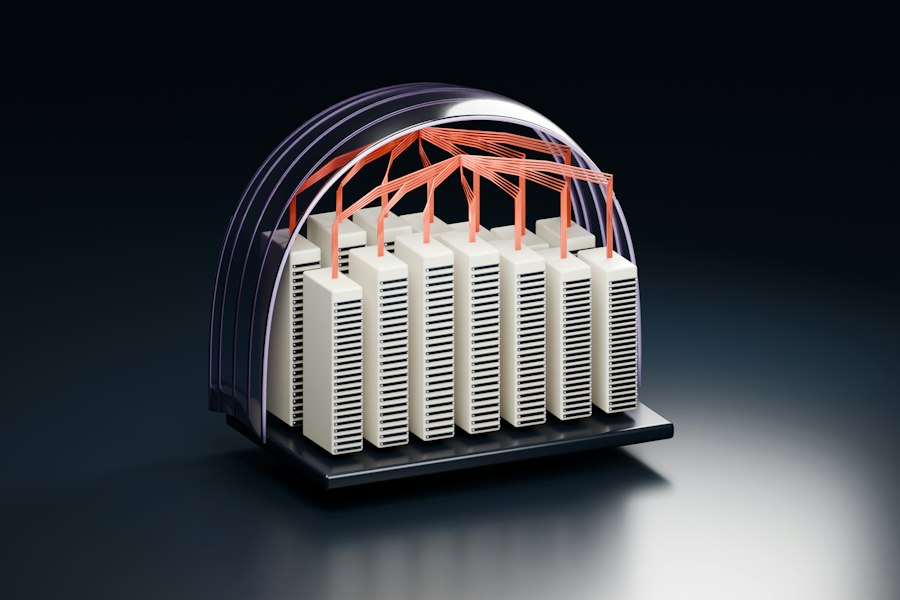
Despite the immense promise, memristor technology faces several significant challenges before widespread commercial adoption. These hurdles span materials science, device physics, manufacturing processes, and circuit design. Overcoming these will be crucial for memristors to fulfill their potential and move from research labs into everyday devices and data centers.
One major challenge lies in device reliability and endurance. For memristors to function as universal memory or in neuromorphic systems, they must withstand billions or even trillions of switching cycles without degradation. Many current memristor prototypes exhibit excellent retention (data holding), but their endurance, or the number of times they can switch between high and low resistance states, needs substantial improvement to match or exceed existing memory technologies like Flash. Similarly, the variability in device characteristics – how consistently different memristors on a chip perform – is another critical factor. Achieving tight control over manufacturing processes to ensure uniform switching behavior and consistent resistance states across millions or billions of devices is a complex engineering feat.
Material Science and Device Optimization
The choice of materials is paramount for memristor performance. Research continues to explore new material systems that offer optimal combinations of switching speed, power consumption, endurance, retention, and resistance contrast. Different applications may require different material properties. For instance, high-speed cache memory would prioritize switching speed, while long-term archival storage would prioritize retention and endurance. Discovering and optimizing these materials, along with understanding the complex physics of ionic migration and defects at the nanoscale, remains an active area of research. Issues like filament formation and dissolution, often responsible for the resistance switching, need to be precisely controlled and understood to ensure predictable and reliable operation.
Scalability and integration with existing CMOS (Complementary Metal-Oxide-Semiconductor) technology are also vital. To be commercially viable, memristors must be able to be fabricated using processes compatible with current semiconductor manufacturing lines and integrated seamlessly with conventional transistors. This involves developing fabrication techniques that allow for high-density arrays without introducing defects or compromising the performance of surrounding CMOS circuits. Three-dimensional stacking capabilities, while promising for density, also introduce new challenges related to thermal management and inter-layer connectivity.
Circuit Design and System Architectures
The inherent non-linearity and non-idealities of memristors require new approaches to circuit design. Traditional circuit theory, largely built on linear components, needs to be re-evaluated and expanded. Designing robust sensing circuits to read the memristor’s state, or writing circuits to precisely set its resistance, is more complex than with conventional memory cells. Furthermore, developing error correction codes and fault-tolerance mechanisms for memristor-based memories is crucial, given the potential for device variability and defects.
For in-memory computing and neuromorphic applications, entirely new system architectures are required. This means rethinking how processors interact with memory, how data flows, and how algorithms are mapped onto memristor arrays. This paradigm shift requires close collaboration between device physicists, circuit designers, computer architects, and even theoretical computer scientists to develop efficient programming models and languages that can leverage the unique capabilities of memristors. The challenge is not just building a better component, but also building a whole new way of computing around it.
To improve your memory skills, consider learning from a Memory Athlete. Many people have enhanced their cognitive abilities by following techniques used by a Memory Athlete. Discover the secrets of memorization by exploring the methods of a Memory Athlete.
Economic and Societal Impact
The widespread adoption of memristor technology has the potential for a profound economic and societal impact, particularly in areas like artificial intelligence, big data analytics, and energy-efficient computing. The ability to create more powerful, energy-efficient, and compact computing devices would drive innovation across numerous industries.
Economically, memristors could create new markets and disrupt existing ones. The memory market alone is a multi-billion dollar industry, and the introduction of a universal memory could redefine competition among semiconductor manufacturers. Companies that successfully develop and commercialize memristor technology could gain a significant competitive advantage. Beyond memory, the impact on AI hardware could be transformative. Cheaper, faster, and more energy-efficient AI accelerators would enable the deployment of sophisticated AI models in edge devices (smartphones, IoT devices, autonomous vehicles) that currently lack the computational power or energy budget. This decentralization of AI could lead to a proliferation of intelligent applications and services.
Enhancing Artificial Intelligence and Edge Computing
The current reliance on cloud-based AI processing is energy-intensive and often limited by network latency. Memristor-based neuromorphic chips could bring AI processing directly to the device, enabling real-time decision-making without constant communication with the cloud. Imagine autonomous vehicles that can process sensory data and make critical decisions instantaneously, or smart homes that learn and adapt to their occupants’ routines with unprecedented efficiency. This shift towards “edge AI” would enhance privacy (as less data needs to be sent to the cloud), reduce latency, and significantly lower the energy footprint of AI systems globally.
Moreover, the sheer increase in computational power and efficiency provided by memristors could enable breakthroughs in scientific research, medical diagnostics, and materials discovery. Complex simulations that currently take days or weeks on supercomputers could be accelerated, leading to faster insights and discoveries. In medicine, memristor-powered AI could assist in real-time disease detection from medical images, accelerate drug discovery processes, and personalize treatments based on vast datasets of patient information.
Towards Sustainable Computing
One of the most pressing societal challenges is the ever-increasing energy consumption of computing infrastructure. Data centers worldwide consume enormous amounts of electricity, contributing significantly to carbon emissions. The Von Neumann bottleneck, with its constant data movement, is a major culprit. By enabling in-memory computing and inherently lower power operation, memristors offer a path towards more sustainable computing. Reducing the energy required for data processing and storage would have a substantial environmental benefit, aligning with global efforts to combat climate change.
The “instant-on” capability and persistent memory would also simplify system design and reduce boot-up times for all electronic devices, from consumer gadgets to industrial control systems. This would lead to a more seamless and responsive user experience, while also potentially extending battery life for portable devices. The long-term societal benefits of these advancements are vast, fostering a more connected, intelligent, and energy-efficient future. While challenges remain, the potential of memristors to fundamentally reshape the landscape of computing makes their continued research and development an incredibly exciting and impactful endeavor.
In exploring the fascinating world of memristors, which are often referred to as hardware that remembers, you might find it interesting to read about techniques for enhancing memory retention in everyday life. For instance, an insightful article discusses various strategies to improve your ability to recall important information, which can complement the technological advancements represented by memristors. You can check out this article on how to better remember important things to gain a deeper understanding of memory, both in the human brain and in electronic devices.
The Journey Ahead: From Lab to Market
| Metric | Description | Typical Value / Range | Unit |
|---|---|---|---|
| Resistance Range | Range of resistance states memristor can achieve | 1 kΩ to 1 MΩ | Ohms (Ω) |
| Switching Speed | Time taken to switch between resistance states | 1 to 100 nanoseconds | ns |
| Endurance | Number of switching cycles before failure | 10^9 to 10^12 | cycles |
| Retention Time | Duration memristor retains resistance state without power | 10 years or more | years |
| Operating Voltage | Voltage required to change resistance state | 0.1 to 3 | Volts (V) |
| Power Consumption | Energy used per switching event | picojoules to nanojoules | Joules (J) |
| Material Types | Common materials used in memristor fabrication | Titanium dioxide, Hafnium oxide, Nickel oxide | N/A |
| Applications | Typical use cases for memristor technology | Non-volatile memory, neuromorphic computing, logic circuits | N/A |
The journey from a theoretical concept to a widely adopted commercial technology is often long and arduous, and memristors are no exception. While the initial discovery and subsequent research have demonstrated incredible potential, the path to market involves surmounting significant engineering, economic, and even psychological barriers. The existing semiconductor industry represents a colossal investment in established technologies and manufacturing processes, making disruption challenging.
For memristors to truly compete and displace existing solutions, they must offer a compelling advantage that justifies the cost and effort of transitioning to new architectures. This advantage could be in terms of performance (speed, density), power efficiency, cost per bit, or unique functionalities not possible with conventional technologies. Initial applications might target niche areas where memristors offer a specific, indispensable benefit, such as ultra-low power edge AI devices or specialized neuromorphic accelerators, before broader adoption in mainstream computing.
Overcoming Engineering and Manufacturing Hurdles
The primary engineering hurdles include refining fabrication processes to achieve high yield, low variability, and long-term reliability at a mass-production scale. This involves mastering the deposition of ultra-thin films with precise control over stoichiometry and defect engineering, as well as developing robust packaging and integration techniques. Establishing industry standards for memristor design, testing, and performance metrics will also be crucial for fostering widespread adoption and interoperability.
Economic hurdles relate to the cost of research, development, and scaling up manufacturing. Creating entirely new fabs or significantly retooling existing ones for memristor production represents a massive capital investment. Demonstrating a clear return on investment will be necessary to attract the private funding required to push the technology to market. Early-stage start-ups focusing on memristor innovation will need significant venture capital, while established semiconductor giants will need to strategically allocate resources towards R&D and pilot production.
The Ecosystem and Mindset Shift
Perhaps the most subtle but critical challenge is the “mindset shift” required from engineers, programmers, and ultimately, consumers. Decades of computing have ingrained the Von Neumann architecture and traditional software development paradigms. Embracing in-memory computing or neuromorphic architectures requires new ways of thinking about algorithms, programming languages, and system design. Developing intuitive software tools, compilers, and development kits that allow engineers to easily leverage memristor capabilities will be essential for their adoption. This also involves training a new generation of engineers and researchers who are adept at designing for these novel architectures.
The development of an entire ecosystem around memristors – including design tools, intellectual property, test equipment, and a skilled workforce – will be vital for their long-term success. Collaboration between academia, industry, and government research initiatives will accelerate this process. Partnerships between memristor device manufacturers and companies specializing in AI software or embedded systems could help bridge the gap between hardware innovation and application development.
The journey ahead for memristors is undoubtedly complex, filled with both immense opportunities and formidable challenges. However, the tantalizing prospect of a future where computers learn, adapt, and operate with unprecedented efficiency and intelligence makes this a journey well worth pursuing. As researchers continue to refine materials, optimize devices, and design innovative architectures, the once theoretical “missing circuit element” inches closer to becoming a cornerstone of tomorrow’s digital world, unlocking new frontiers in computing and human-machine interaction.
Elevate Your Cognitive Edge with Memory Athlete
As we contemplate the future shaped by hardware that remembers and learns, it’s a perfect moment to consider how you can personally enhance your own most powerful memory and processing unit: your brain. Just as memristors promise to revolutionize computational efficiency, you too can unlock your mind’s full potential.
Don’t just read about the future of memory; actively participate in it. Whether you’re a student striving for academic excellence, a professional looking to sharpen your focus, or simply someone eager to keep their mind agile, the power to improve your recall and cognitive abilities is now at your fingertips.
Take the first step towards a sharper, more effective mind. Download Memory Athlete, the ultimate app designed to help you master recall, sharpen focus, and unlock your brain’s full potential. With scientifically-backed exercises and engaging challenges, Memory Athlete guides you on a personalized journey to elevate your memory and cognitive performance. It’s time to train your brain like an athlete trains their body. Discover the difference a truly optimized mind can make in your life today.





Leave a Reply