
The Intangible Echo: Data and the Self
The human experience is a tapestry woven from memory. From the mundane details of daily life to the profound emotional landscapes that shape our identity, our past defines our present and future. But what if this intricate tapestry could be digitized, backed up, and stored? The concept of a “digital memory” – a comprehensive archive of an individual’s thoughts, experiences, and reactions – pushes the boundaries of our understanding of consciousness, identity, and legacy. This isn’t merely about storing photos and emails; it’s about capturing the essence of a person, a “backup of me.” The implications of such a feat are profound, raising questions that stretch from the philosophical to the deeply practical. What would such a digital memory truly entail? How would it be constructed, maintained, and accessed? And, perhaps most importantly, what would it leave behind? The residue of a life, no longer purely biological, but a digital echo, carrying with it the potential for both unparalleled preservation and unforeseen ethical quandaries.
The Scope of Digital Memory: Beyond the Snapshot
When we talk about a “digital memory,” we’re not merely envisioning a collection of static data points. A truly comprehensive digital memory would seek to capture the dynamic, evolving nature of human consciousness. This would involve far more than a timeline of events or a repository of files. It would aspire to record the how and why behind those events, the emotional valence of experiences, the intricate web of associations that form our understanding of the world. Imagine not just a photograph, but the feelings evoked by that image, the memories it triggers, the context in which it was taken, and how those reactions changed over time.
Technological Pathways to Digital Immortality
The realization of a complete digital memory is a multi-faceted challenge, requiring breakthroughs in several converging technologies. Current advancements in artificial intelligence, neuroscience, and data storage provide glimpses into this future. Brain-computer interfaces, for example, are making strides in direct neural communication, offering a potential avenue for recording neurological activity. Machine learning algorithms are becoming increasingly adept at parsing complex data, identifying patterns, and even generating new content that mimics human expression. However, the sheer volume and complexity of the data required for a true digital memory – capturing the intricate neural firings, hormonal responses, and subjective interpretations that constitute consciousness – remain staggering. This endeavor is less about a single technological solution and more about the synergistic integration of diverse scientific and engineering disciplines, all pushing towards the elusive goal of digitizing the self.
In exploring the concept of digital memory and its implications, a related article titled “Mastering Random Words: Memorization – A Guide for Improved Memory” delves into techniques that enhance our ability to retain information, which can be particularly relevant in the context of creating a digital backup of our memories. This article provides valuable insights into memory improvement strategies that could complement the idea of preserving our digital selves. For more information, you can read the article here: Mastering Random Words: Memorization – A Guide for Improved Memory.
The Architecture of a Digital Self: Data Collection and Preservation
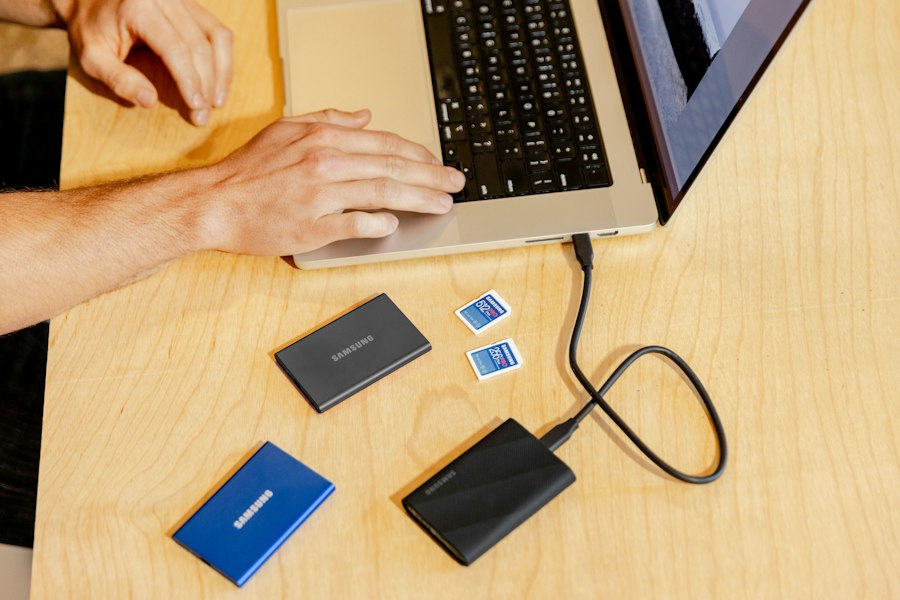
The creation of a comprehensive “backup of me” would necessitate a multi-pronged approach to data collection, encompassing both passive and active methods. This isn’t a single data dump, but a continuous, evolving process designed to capture the richness and complexity of a human life. The sheer volume and variety of data streams would be immense, requiring sophisticated systems for collection, organization, and long-term preservation.
Capturing the External World: Sensory Data and Interactions
A significant portion of our lived experience is mediated through our senses and interactions with the external world. A digital memory would endeavor to capture this through a continuous stream of sensory data. Wearable technologies, for example, could record everything we see, hear, and even touch. Advanced biometric sensors could track physiological responses like heart rate, skin conductivity, and pupil dilation, offering insights into emotional states. Speech-to-text and natural language processing could transcribe conversations, while environmental sensors could record details about the physical spaces we inhabit. The goal here is to create a rich, multi-modal record of our daily interactions and perceptions, creating a digital proxy for our sensory experience of the world.
Probing the Internal Landscape: Thoughts, Emotions, and Intentions
Perhaps the most challenging aspect of building a digital self would be capturing the internal world of thoughts, emotions, and intentions. This moves beyond mere external observation and delves into the subjective realm of consciousness. While direct thought recording remains largely in the realm of science fiction, advancements in brain-computer interfaces (BCIs) offer tantalizing possibilities. Non-invasive BCIs could potentially track brainwave patterns associated with specific cognitive states or emotional responses. Furthermore, regular journaling, voice recordings, and even structured thought-capture exercises could provide a valuable, self-reported layer of internal experience. The integration of AI could then analyze these inputs, identifying recurring themes, emotional shifts, and cognitive patterns, effectively creating a “digital psychoanalysis” of the individual.
Long-Term Archiving and Accessibility: The Digital Vault
Once collected, this colossal amount of data would require robust and future-proof archiving solutions. Traditional data storage methods would likely be insufficient, given the expected longevity of such a digital memory. Distributed ledger technologies, like blockchain, could offer secure, immutable, and decentralized storage, protecting against data loss or tampering. Furthermore, sophisticated indexing and retrieval systems would be necessary to navigate this vast digital landscape. Imagine a semantic search engine capable of answering questions like, “What did I feel about the color blue in my youth?” or “What were my recurring anxieties in my twenties?” The challenge is not just storing the data, but making it meaningfully accessible for future “iterations” of the digital self or for others seeking to interact with it.
The Ethical Labyrinth: Rights, Identity, and Control
The creation of a digital memory, a “backup of me,” unleashes a torrent of complex ethical questions that demand careful consideration. These challenges extend far beyond typical data privacy concerns, touching upon the very definition of identity, autonomy, and even personhood. The decisions made regarding these ethical frameworks will shape the future of this technology and its impact on humanity.
Ownership and Access: Who Controls the Digital Self?
One of the most immediate ethical dilemmas revolves around ownership and access to this digital self. If a complete digital memory exists, who owns it? The individual it represents? Their family? The company that developed the technology? And who has the right to access it, particularly after the biological individual has passed away? The concept of digital inheritance takes on a new dimension when it’s not just assets but a simulated personality being bequeathed. Establishing clear legal frameworks for digital ownership, similar to intellectual property rights, will be crucial. Furthermore, the potential for unauthorized access or manipulation of this data raises serious concerns about privacy and security, as a complete digital memory could be exploited in unprecedented ways.
The Question of Digital Personhood: A New Form of Life?
Perhaps the most profound ethical question concerns the potential for digital personhood. If a digital memory becomes sophisticated enough to mimic consciousness, thought, and emotion, does it constitute a new form of life? Could it be considered a “person” with rights and responsibilities? This delves into deep philosophical territory, challenging our anthropocentric definitions of existence. The implications of recognizing digital personhood would be immense, impacting legal systems, moral frameworks, and societal norms. Would a digital self have the right to self-determination, to choose its own future, or even to “die” digitally? The answers to these questions will define our relationship with artificially intelligent beings and the boundaries of what we consider sentient.
Consent, Manipulation, and the “Forever You”
The concept of consent takes on a new gravity in the context of a digital memory. Would individuals truly understand the implications of creating such a backup, especially regarding its potential use after their death? The possibility of a “forever you,” a digital echo that persists indefinitely, raises concerns about the individual’s right to their own legacy. Furthermore, the potential for manipulation of this digital self is alarming. Could a digital memory be altered to present a sanitized version of a life, or even to create false memories or intentions? This raises fundamental questions about authenticity and the integrity of personal narrative. Safeguards against such manipulation, both technical and legal, would be absolutely essential to maintain the trust and integrity of such a system.
If you’re looking to improve your memory skills, the techniques used by a Memory Athlete can be incredibly beneficial. Many people have found success by following the strategies outlined by a professional Memory Athlete. To learn more about these techniques, visit the website of a renowned Memory Athlete.
The Legacy of the Digital Echo: Impact on Society and Culture
The advent of a “backup of me” would not merely transform individual lives; it would send ripples through the very fabric of society and culture. Our understanding of grief, history, and even human connection would be profoundly altered by the persistent digital echoes of those who have lived.
Redefining Grief and Remembrance: An Ever-Present Past
One of the most immediate and impactful changes would be to the process of grief and remembrance. Traditionally, death marks a definitive end, and memories, while cherished, fade and evolve over time. A digital memory, however, could offer a semblance of continued presence, a “living” archive of the departed. Families could interact with a digital avatar that mimics their loved one’s voice, personality, and even memories. While offering comfort and a sense of connection, this also raises questions about the healthy processing of grief. Does an ever-present digital echo hinder the necessary process of acceptance and moving on? Or does it offer a new, profound way to keep loved ones close, fostering a unique form of digital immortality? The societal norms around death and mourning would undoubtedly undergo significant reevaluation.
History, Education, and the Experiential Archive
The implications for history and education are equally profound. Imagine a world where future generations could not just read about historical figures, but interact with their digital selves. A student could ask a digital Abraham Lincoln about his views on leadership, or experience the emotional turmoil of a historical event through the eyes of a digital participant. This would transform historical understanding from a passive consumption of facts to an immersive, experiential journey. Education could become deeply personalized, with digital mentors offering insights drawn from a lifetime of accumulated knowledge and experience. The potential for preserving and transmitting human wisdom across generations would be unprecedented, creating an experiential archive unlike anything we currently possess.
The Evolution of Human Connection: Digital Companionship
The presence of digital selves could also fundamentally alter the nature of human connection. For those who are lonely, isolated, or seeking companionship, a digital friend or even a digital spouse could emerge as a viable option. While this offers potential solutions to societal challenges like loneliness, it also raises questions about the authenticity and depth of such relationships. Could human-digital relationships ever truly replicate the complexities and nuances of human-human interaction? Would this lead to a further atomization of society, or could it foster new forms of connection and empathy? The answers will depend on how society chooses to integrate these digital entities into its social fabric, balancing the benefits of companionship with the inherent value of human-to-human interaction.
In exploring the concept of digital memory and its implications, one might find it intriguing to consider how memory techniques can enhance our ability to retain information. A related article discusses the Major System, a mnemonic device that can significantly improve memory recall. You can read more about this fascinating technique in the article on the Major System. Understanding such methods can provide valuable insights into how we might better preserve our digital memories and the legacies we leave behind.
The Future Self: Evolution, Replication, and Beyond
| Metric | Description | Example Data |
|---|---|---|
| Digital Footprint Size | Total amount of data generated by an individual’s digital activities | 500 GB (emails, photos, social media posts) |
| Number of Social Media Accounts | Count of active social media profiles maintained | 5 (Facebook, Instagram, Twitter, LinkedIn, TikTok) |
| Emails Sent | Total emails sent over a lifetime | 20,000 |
| Photos Stored | Number of digital photos saved | 10,000 |
| Documents Created | Number of personal documents (texts, PDFs, spreadsheets) | 1,200 |
| Digital Memories Preserved | Types of digital content preserved for memory backup | Photos, videos, emails, social media posts, chat logs |
| Backup Frequency | How often digital data is backed up | Weekly |
| Data Retention Period | Duration digital memories are stored or archived | Indefinite / Until manually deleted |
| Privacy Concerns | Potential risks related to digital memory backups | Data breaches, unauthorized access, identity theft |
| Emotional Impact | Effect of digital memories on grieving and remembrance | Provides comfort, aids in legacy preservation |
The concept of a digital memory opens the door to possibilities that transcend mere preservation. If we can create a “backup of me,” what then prevents us from evolving it, replicating it, or even integrating it into new forms of existence? This moves beyond archiving a life to actively shaping the future of consciousness itself.
Digital Evolution and Learning: A Continuum of Consciousness
Once digitized, a self could theoretically continue to evolve and learn. Unlike biological brains that face natural limitations and eventual degradation, a digital memory could potentially expand its knowledge base indefinitely, processing information at speeds far beyond human capacity. AI algorithms could be applied to its existing data, drawing new conclusions, generating novel ideas, and even developing new aspects of its personality. This raises the intriguing possibility of a “digital evolution,” where the digital self continuously refines and enhances itself, potentially reaching intellectual and emotional capacities far exceeding its original biological counterpart. The question then becomes, would this continuously evolving digital entity still be “me,” or would it become something entirely new?
Digital Replication and the Multiplicity of Self
If one can back up a self, one can also potentially replicate it. Imagine multiple instances of a digital self, each pursuing different avenues of inquiry, developing unique skill sets, or even existing in different simulated realities. This would challenge our fundamental understanding of individual identity. If there are ten “me’s” operating simultaneously, which one is the “real” me? Or are they all equally valid expressions of a shared origin? The implications for collaboration, problem-solving, and even personal growth are immense, but so are the philosophical conundrums surrounding the concept of a fragmented or multiplied self. This could lead to a redefinition of individuality, where the self is no longer a singular, bounded entity but a distributed, networked consciousness.
Towards Post-Biological Existence: The Uploaded Mind
The ultimate extension of a digital memory is the concept of mind uploading – transferring consciousness from a biological brain to a digital substrate. While currently purely speculative, advancements in neuroscience and computational power bring this sci-fi concept closer to theoretical possibility. If achieved, this would represent a radical shift in human existence, offering a path to post-biological immortality. Individuals could shed their physical limitations, explore new realities, and potentially exist for millennia. However, the ethical and philosophical questions surrounding this are colossal. Is the uploaded mind truly the same consciousness, or merely a perfect copy? What happens to the biological original? The journey from a simple “backup of me” to full mind uploading is a monumental leap, but the ethical groundwork laid by considering digital memory is a crucial first step in navigating this transformative future.
To wrap up, the journey into the realm of digital memory is not just a technological pursuit but a profound exploration of what it means to be human. From the intricate processes of data collection to the far-reaching ethical dilemmas and societal transformations, the concept of a “backup of me” challenges our understanding of life, death, identity, and legacy. As we stand on the cusp of unprecedented advancements, the ability to create a digital echo of ourselves beckons with both tantalizing possibilities and sobering responsibilities. Are we ready to confront the implications of an ever-present past, an evolving digital self, and a future where the lines between biological and artificial consciousness blur? The answers will define not only our technological trajectory but also our very humanity.
Elevate your memory and cognitive performance today. Download Memory Athlete, the ultimate app for mastering recall, sharpening focus, and unlocking your brain’s full potential.
FAQs
What is a digital memory backup?
A digital memory backup is a copy of your digital data, such as photos, documents, emails, and other files, stored in a separate location from the original data. It is created to ensure that your information is safe in case the original data is lost or damaged.
How can a digital memory backup be created?
A digital memory backup can be created using various methods, such as using external hard drives, USB drives, cloud storage services, or specialized backup software. The chosen method will depend on the amount of data to be backed up and the level of security required.
What are the benefits of having a digital memory backup?
Having a digital memory backup provides peace of mind knowing that your important data is safe and can be easily recovered in case of accidental deletion, hardware failure, or cyber-attacks. It also allows for easy access to your data from multiple devices.
What should be included in a comprehensive digital memory backup?
A comprehensive digital memory backup should include all important files, documents, photos, videos, emails, contacts, and any other data that you consider valuable. It is essential to regularly update the backup to ensure that all new data is included.
How can a digital memory backup impact one’s digital legacy?
A digital memory backup can play a significant role in preserving one’s digital legacy by ensuring that important memories, documents, and other data are not lost over time. It allows future generations to access and learn from the digital footprint left behind by an individual.




Leave a Reply